

- Thread starter
- #1
Most camper shells do one job reasonably well:
They cover the truck bed.
Then real life unfolds.
Rain finds the one seal that looked perfectly fine sneak in the driveway. Dusts through gaps nobody knew existed. Cold metal turns warm breath into condensation, and the cargo area begins developing its own indoor weather system.
Add limited storage, awkward access, and an installation process that may require several friends, professional help, and at least one person saying, “Hold it there—no, the other there,” and there is clearly room for improvement.
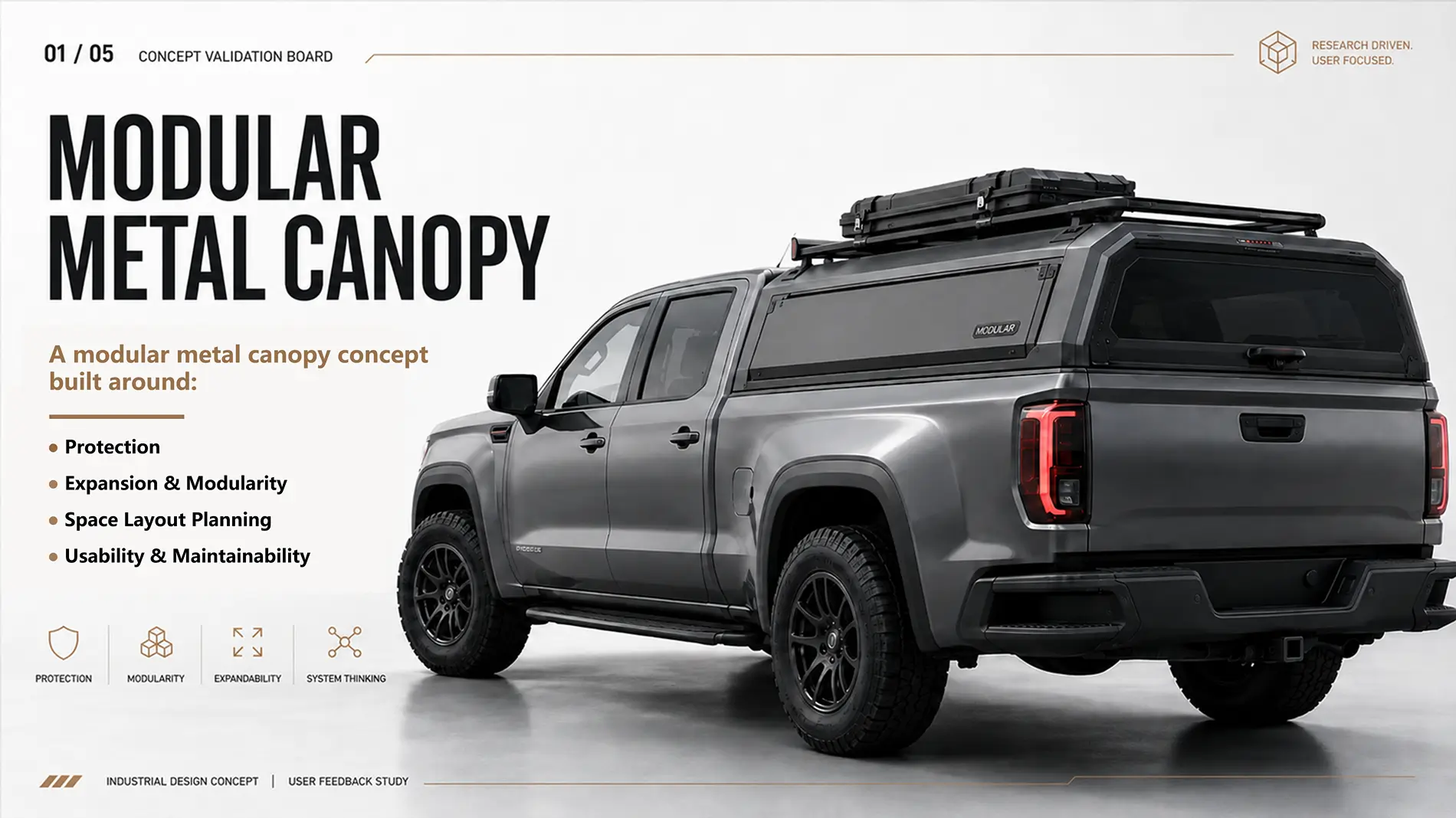
That is why we are developing a new Modular Metal Camper Shell Concept built around four priorities:
This is still a concept—not a finished production model—so honest criticism is much more useful than polite applause.


The Problems We Are Trying to Solve
1. Poor Sealing and Water Leaks
Weak seals and panel gaps can allow rainwater into the bed, leaving tools, camping gear, and luggage wet or unprotected.
Our goal is to improve sealing around the tailgate, doors, panel joints, and other interfaces so the interior stays dry in real weather—not just during a garden-hose demonstration.
2. Dust Ingress and Dirty Cargo
When a truck moves through dusty terrain, negative pressure behind the cab can pull fine dust through small openings in the shell.
By the end of the trail, the cargo may look like it participated in the drive without permission.
We are exploring a better-sealed structure combined with a positive-pressure ventilation system to help reduce dust entering through hidden gaps.
3. Condensation Buildup
Cold metal surfaces can turn warm interior moisture into condensation, especially when the shell is used for sleeping or extended camping.
The result can be a damp interior, musty odors, and sleeping bags that feel suspiciously less dry than they did the night before.
The concept therefore includes insulation and ventilation intended to reduce moisture buildup and improve interior comfort.
4. Complex Installation
Traditional one-piece metal canopies can be heavy and difficult to install or remove. Some require multiple people, professional tools, and complicated electrical work.
We are exploring a modular structure that uses factory mounting locations and a C-clamp-style attachment system, reducing permanent modifications and making installation or removal more manageable.
5. Limited Storage and Usability
A large empty shell is not automatically an organized shell.
Without flexible mounting points, work surfaces, or storage modules, gear tends to form one large pile near the tailgate—or one very inaccessible pile near the cab.
The concept treats the camper shell as a configurable platform rather than just a cover.
Proposed Protection and Climate-Control Solutions
Upgraded Sealing System
The current concept includes:
Positive-Pressure Air Vent
A positive-pressure vent would help maintain slightly higher air pressure inside the shell while the truck is moving.
This may help reduce the amount of dust pulled through small gaps and hidden openings.
It will not create a laboratory clean room in the truck bed, but it should make the cargo area less interested in collecting an entire trail's worth of scenery.
Side Ventilation
Water-resistant side vents are proposed to improve airflow and help reduce:
Aluminum Honeycomb Panels
The concept uses aluminum honeycomb panels to provide:
Lightweight but Reinforced Construction
Instead of relying on one extremely heavy shell, the concept uses a modular aluminum structure with high-strength connection profiles at the corners and joints.
This approach is intended to provide:
The idea is simple: strong enough for rough use, but not so heavy that installation becomes a neighborhood lifting competition.
From Camper Shell to Modular Platform
The main idea behind this concept is that owners should not have to purchase every feature on day one.
The base shell would provide the essential structure and protection, while standardized mounting interfaces would allow additional accessories to be added, removed, or upgraded later.
Expansion points would use pre-installed M8 low-profile countersunk hex rivet nuts , making future DIY installation more straightforward.
We also plan to publish key dimensional drawings so owners and accessory makers can develop compatible solutions.
That could make the system useful for:
Openable Roof Skylight
The proposed roof includes an openable skylight intended to improve natural lighting and visibility inside the shell.
The roof layout is also being designed with roof-tent integration in mind.
We know this feature may divide opinions. Some owners may see natural light and ventilation. Others may see another potential opening that needs to remain perfectly sealed.
That is exactly the kind of feedback we need.
Integrated Roof Rails and Expansion Crossbars
The base configuration would include integrated roof rails, with expansion crossbars available as an upgrade.
Future roof options may include:
The right side is designed as an expansion door with optional internal and external tie-down points.
The opposite side may use a transparent access panel or glass door, allowing users to reach stored equipment without opening the rear.
Work Surfaces and Side Tables
We are evaluating several table configurations:
Full-Width External Flip-Down Table
A large work surface for:
A more compact option that leaves part of the side opening available for storage or access.
Interior Flip-Down Mini Table
A smaller table mounted inside a storage module for in-vehicle work, dining, electronics, or trip planning.
One of the main questions is whether owners prefer the maximum surface area of a full-width table or the flexibility of a half-width design.
Interior Storage and Accessory Modules
Rear Storage Workstation
A rear storage box could hold cookware, tools, or smaller equipment.
When opened, it could also function as a work surface. Some stored items may remain accessible through the side door, reducing the need to unload gear from the rear.
Full-Width and Half-Width Side Storage Boxes
The concept includes multiple storage-box sizes with:
Fixed MOLLE panels could provide extensive mounting space for pouches, recovery equipment, first-aid kits, lights, and tools.
Slide-Out Molle Panel
A slide-out panel would allow frequently used equipment to be pulled outside the vehicle for faster access.
This may be especially useful for recovery gear, tools, outdoor kitchens, or emergency supplies.
The tradeoff is that slide-out systems introduce additional hardware and moving parts, so we would like to know whether the easier access is worth the added complexity.
Retractable Interior Ladder
A retractable rotating ladder is being considered for access from inside the canopy to a rooftop tent.
LED Lighting
An interior LED light strip is planned as part of the expansion system to improve visibility during nighttime loading, camping, and work.
Additional Modules Under Consideration
Proposed Product Roadmap
Stage 1: Base Configuration
The initial version would focus on essential protection and structure:
The second stage would introduce:
Later options may include:
We Would Like Your Honest Feedback
1. Pain Points
Have you experienced any of these problems with a camper shell?
2. Proposed Solutions
What do you think about the proposed solutions?
3. Modular System
Does a staged modular system fit the way you would purchase and use a camper shell?
Which features would you choose first?
What important feature is missing?
4. Specific Design Questions
We would especially appreciate your thoughts on these choices:
Ideas, criticism, unusual use cases, and “you forgot the obvious part” comments are all welcome.
We would much rather discover a problem during concept development than after someone has installed the shell, driven through a storm, and learned that their sleeping bag now has the water retention of a kitchen sponge.
Thanks for taking a look and helping us shape the next version.
They cover the truck bed.
Then real life unfolds.
Rain finds the one seal that looked perfectly fine sneak in the driveway. Dusts through gaps nobody knew existed. Cold metal turns warm breath into condensation, and the cargo area begins developing its own indoor weather system.
Add limited storage, awkward access, and an installation process that may require several friends, professional help, and at least one person saying, “Hold it there—no, the other there,” and there is clearly room for improvement.
That is why we are developing a new Modular Metal Camper Shell Concept built around four priorities:
- Protection
- Expansion and modularity
- Smarter Space Planning
- Easier use and maintenance
This is still a concept—not a finished production model—so honest criticism is much more useful than polite applause.
The Problems We Are Trying to Solve
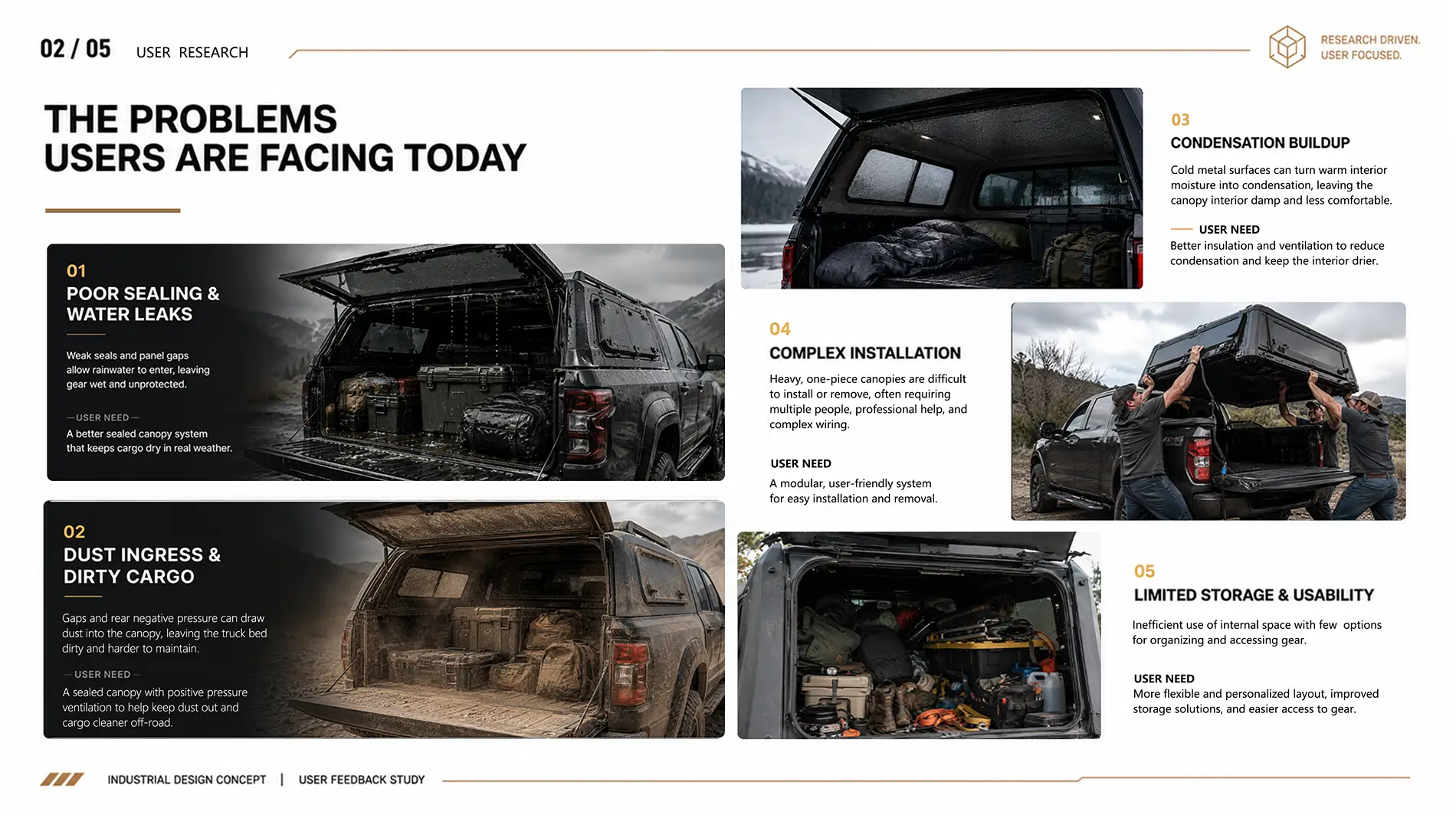
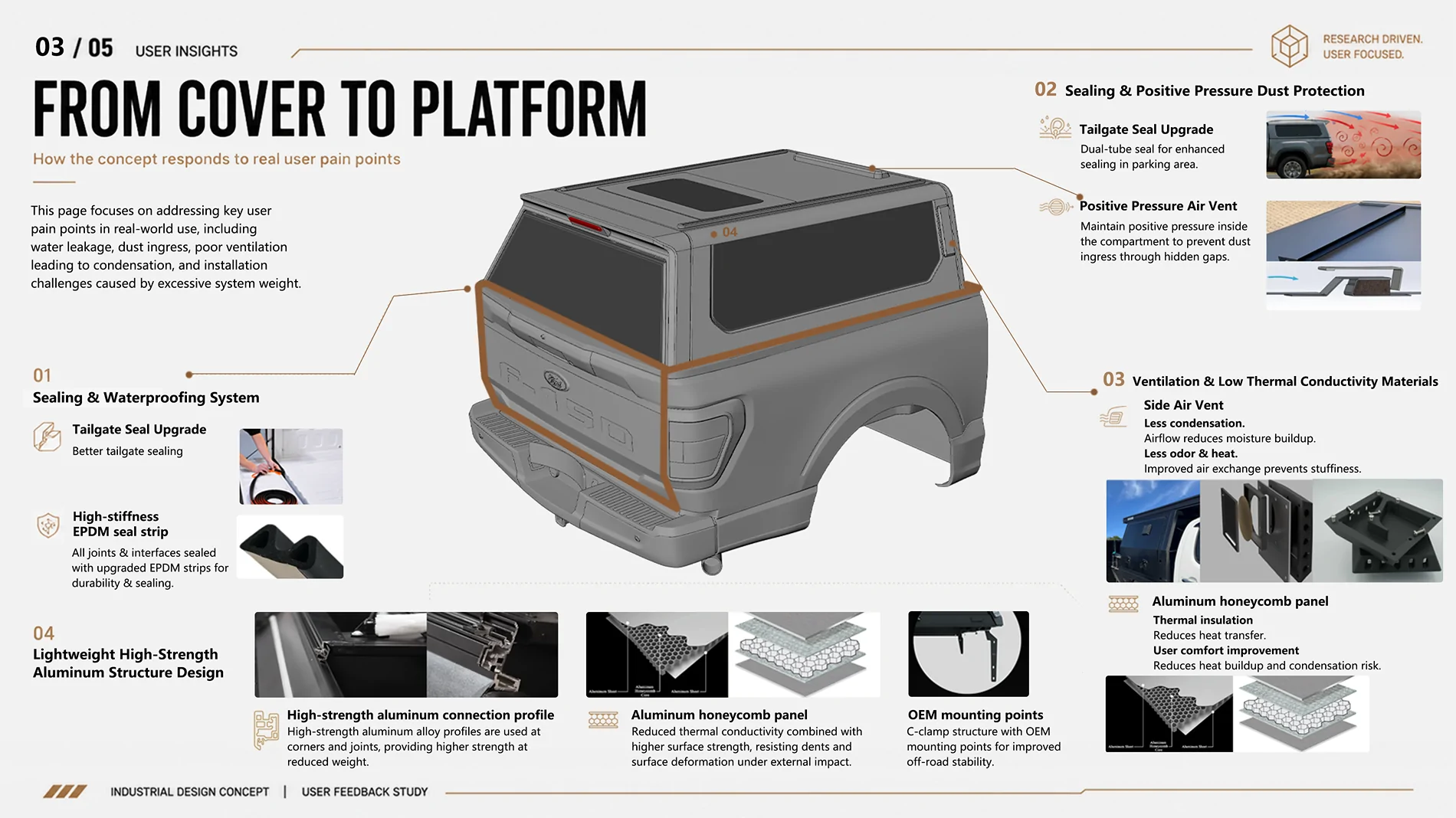
1. Poor Sealing and Water Leaks
Weak seals and panel gaps can allow rainwater into the bed, leaving tools, camping gear, and luggage wet or unprotected.
Our goal is to improve sealing around the tailgate, doors, panel joints, and other interfaces so the interior stays dry in real weather—not just during a garden-hose demonstration.
2. Dust Ingress and Dirty Cargo
When a truck moves through dusty terrain, negative pressure behind the cab can pull fine dust through small openings in the shell.
By the end of the trail, the cargo may look like it participated in the drive without permission.
We are exploring a better-sealed structure combined with a positive-pressure ventilation system to help reduce dust entering through hidden gaps.
3. Condensation Buildup
Cold metal surfaces can turn warm interior moisture into condensation, especially when the shell is used for sleeping or extended camping.
The result can be a damp interior, musty odors, and sleeping bags that feel suspiciously less dry than they did the night before.
The concept therefore includes insulation and ventilation intended to reduce moisture buildup and improve interior comfort.
4. Complex Installation
Traditional one-piece metal canopies can be heavy and difficult to install or remove. Some require multiple people, professional tools, and complicated electrical work.
We are exploring a modular structure that uses factory mounting locations and a C-clamp-style attachment system, reducing permanent modifications and making installation or removal more manageable.
5. Limited Storage and Usability
A large empty shell is not automatically an organized shell.
Without flexible mounting points, work surfaces, or storage modules, gear tends to form one large pile near the tailgate—or one very inaccessible pile near the cab.
The concept treats the camper shell as a configurable platform rather than just a cover.
Proposed Protection and Climate-Control Solutions
Upgraded Sealing System
The current concept includes:
- An improved tailgate sealing solution
- High-stiffness EPDM sealing strips
- Upgraded seals around panel joints and interfaces
- A dual-tube sealing approach around key openings
Positive-Pressure Air Vent
A positive-pressure vent would help maintain slightly higher air pressure inside the shell while the truck is moving.
This may help reduce the amount of dust pulled through small gaps and hidden openings.
It will not create a laboratory clean room in the truck bed, but it should make the cargo area less interested in collecting an entire trail's worth of scenery.
Side Ventilation
Water-resistant side vents are proposed to improve airflow and help reduce:
- Condensation
- Heat buildup
- Trapped odors
- Stale interior air
Aluminum Honeycomb Panels
The concept uses aluminum honeycomb panels to provide:
- Lower thermal conductivity
- Reduced heat transfer
- Better resistance to dents and surface deformation
- High strength without unnecessary weight
Lightweight but Reinforced Construction
Instead of relying on one extremely heavy shell, the concept uses a modular aluminum structure with high-strength connection profiles at the corners and joints.
This approach is intended to provide:
- Structural rigidity
- Lower overall weight
- Easier transportation and assembly
- Better serviceability if one panel or module is damaged
The idea is simple: strong enough for rough use, but not so heavy that installation becomes a neighborhood lifting competition.
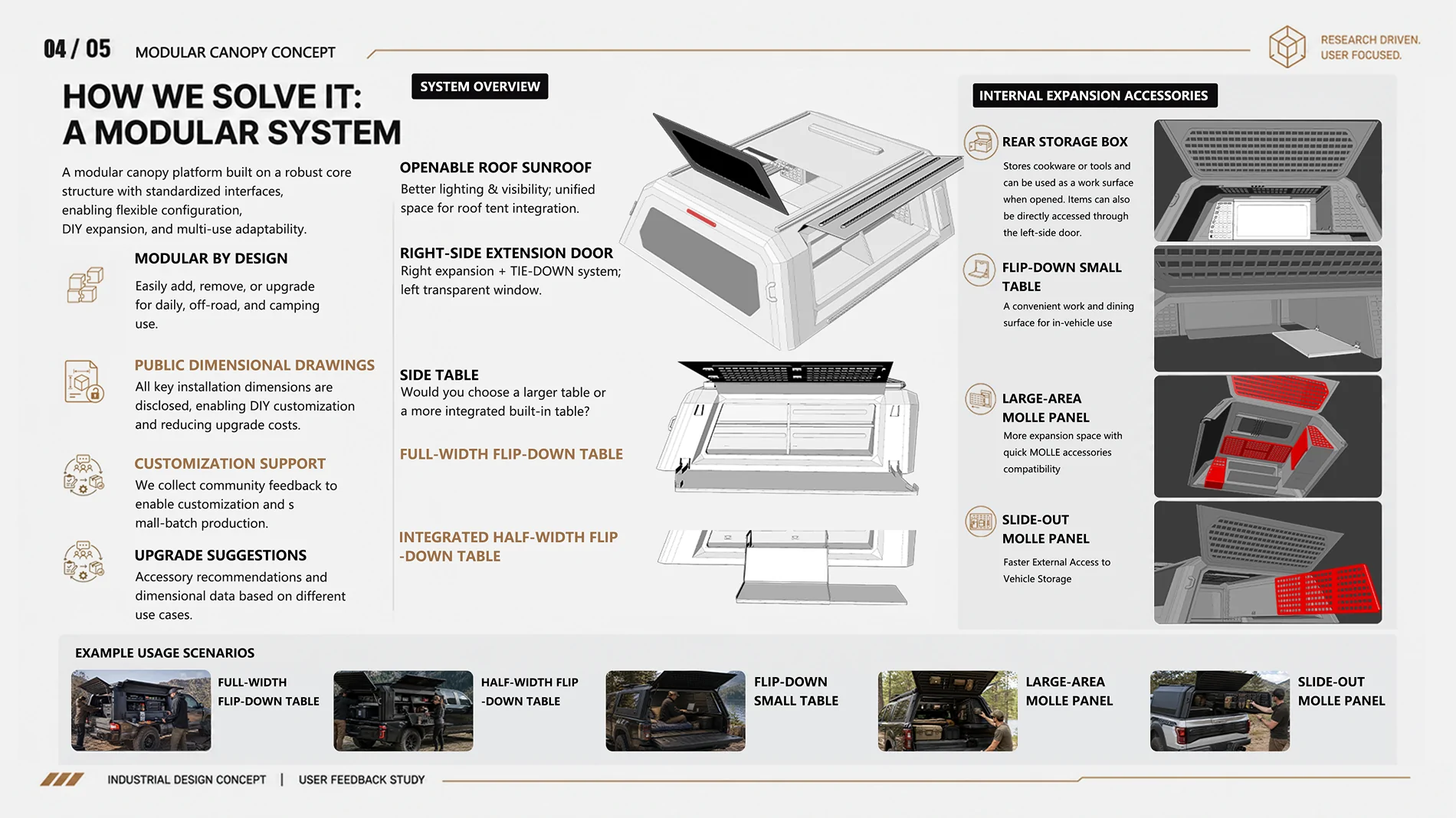
From Camper Shell to Modular Platform
The main idea behind this concept is that owners should not have to purchase every feature on day one.
The base shell would provide the essential structure and protection, while standardized mounting interfaces would allow additional accessories to be added, removed, or upgraded later.
Expansion points would use pre-installed M8 low-profile countersunk hex rivet nuts , making future DIY installation more straightforward.
We also plan to publish key dimensional drawings so owners and accessory makers can develop compatible solutions.
That could make the system useful for:
- Daily hauling
- Camping
- Overlanding
- Worksite storage
- Fishing and hunting trips
- Long-distance travel
- Custom DIY builds
Openable Roof Skylight
The proposed roof includes an openable skylight intended to improve natural lighting and visibility inside the shell.
The roof layout is also being designed with roof-tent integration in mind.
We know this feature may divide opinions. Some owners may see natural light and ventilation. Others may see another potential opening that needs to remain perfectly sealed.
That is exactly the kind of feedback we need.
Integrated Roof Rails and Expansion Crossbars
The base configuration would include integrated roof rails, with expansion crossbars available as an upgrade.
Future roof options may include:
- Half-width roof platform
- Full-width roof platform
- Rear roof MOLLE mounting system
- Access solutions for a rooftop tent
The right side is designed as an expansion door with optional internal and external tie-down points.
The opposite side may use a transparent access panel or glass door, allowing users to reach stored equipment without opening the rear.
Work Surfaces and Side Tables
We are evaluating several table configurations:
Full-Width External Flip-Down Table
A large work surface for:
- Camp cooking
- Tools
- Food preparation
- Tailgate gatherings
- Worksite tasks
A more compact option that leaves part of the side opening available for storage or access.
Interior Flip-Down Mini Table
A smaller table mounted inside a storage module for in-vehicle work, dining, electronics, or trip planning.
One of the main questions is whether owners prefer the maximum surface area of a full-width table or the flexibility of a half-width design.
Interior Storage and Accessory Modules
Rear Storage Workstation
A rear storage box could hold cookware, tools, or smaller equipment.
When opened, it could also function as a work surface. Some stored items may remain accessible through the side door, reducing the need to unload gear from the rear.
Full-Width and Half-Width Side Storage Boxes
The concept includes multiple storage-box sizes with:
- Internal dividers
- Front Molle panels
- Optional slide-out accessories
- Flexible placement based on the owner's use case
Fixed MOLLE panels could provide extensive mounting space for pouches, recovery equipment, first-aid kits, lights, and tools.
Slide-Out Molle Panel
A slide-out panel would allow frequently used equipment to be pulled outside the vehicle for faster access.
This may be especially useful for recovery gear, tools, outdoor kitchens, or emergency supplies.
The tradeoff is that slide-out systems introduce additional hardware and moving parts, so we would like to know whether the easier access is worth the added complexity.
Retractable Interior Ladder
A retractable rotating ladder is being considered for access from inside the canopy to a rooftop tent.
LED Lighting
An interior LED light strip is planned as part of the expansion system to improve visibility during nighttime loading, camping, and work.
Additional Modules Under Consideration
- Left-side insect-screen tent
- Bicycle rack
- Rooftop platforms
- Additional tie-down systems
- Custom storage modules based on specific activities
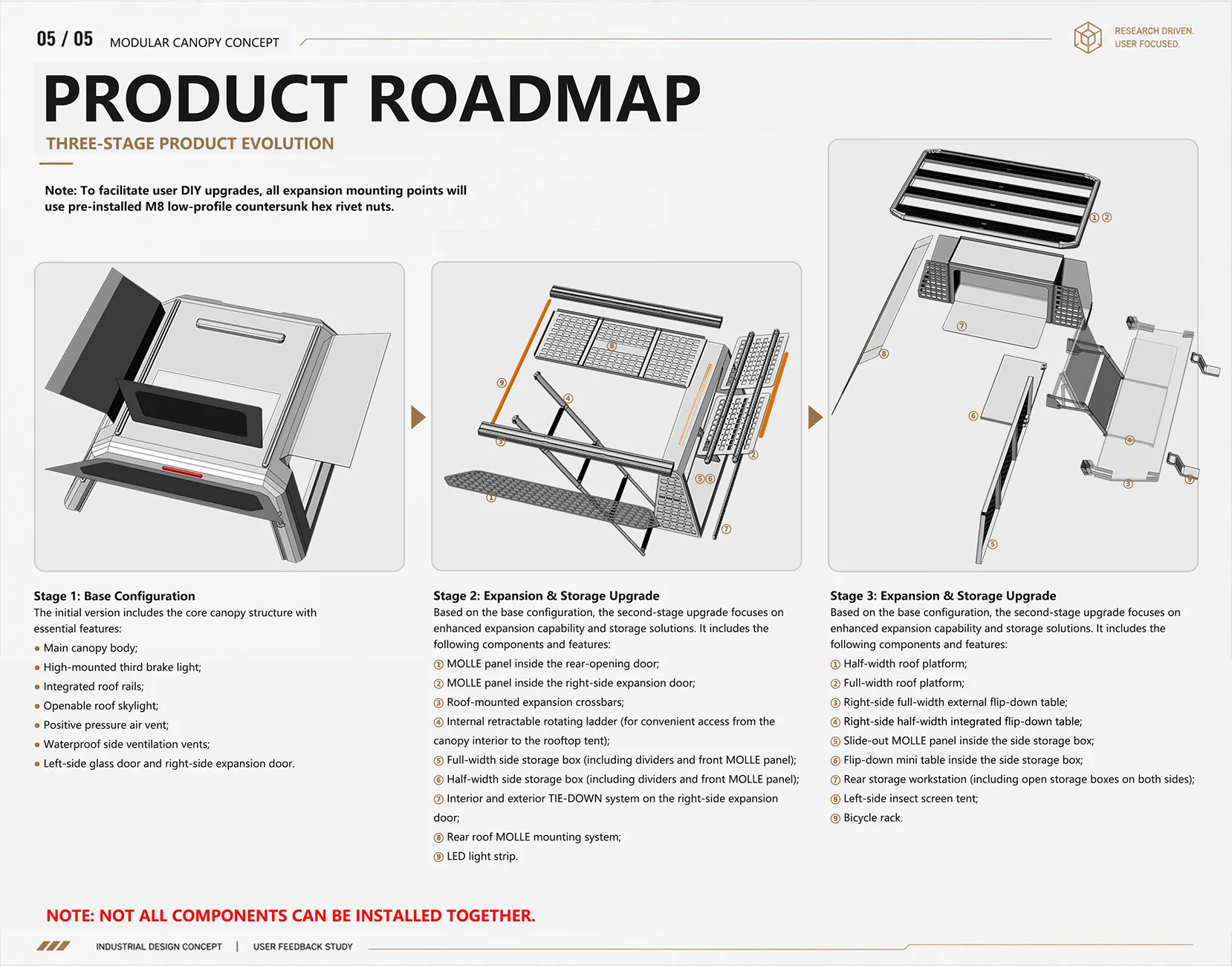
Proposed Product Roadmap
Stage 1: Base Configuration
The initial version would focus on essential protection and structure:
- Main aluminum camper-shell body
- High-mounted third brake light
- Integrated roof rails
- Openable roof skylight
- Positive-pressure air vent
- Water-resistant side ventilation
- Left-side glass access door
- Right-side expansion door
The second stage would introduce:
- MOLLE panels inside the rear door
- MOLLE panels inside the right-side door
- Roof expansion crossbars
- Retractable interior ladder
- Full-width or half-width side storage boxes
- Interior and exterior tie-down systems
- Rear roof MOLLE system
- LED lighting
Later options may include:
- Half-width roof platform
- Full-width roof platform
- Full-width external table
- Half-width integrated table
- Slide-out MOLLE panel
- Interior mini table
- Rear storage workstation
- Insect-screen room
- Bicycle rack
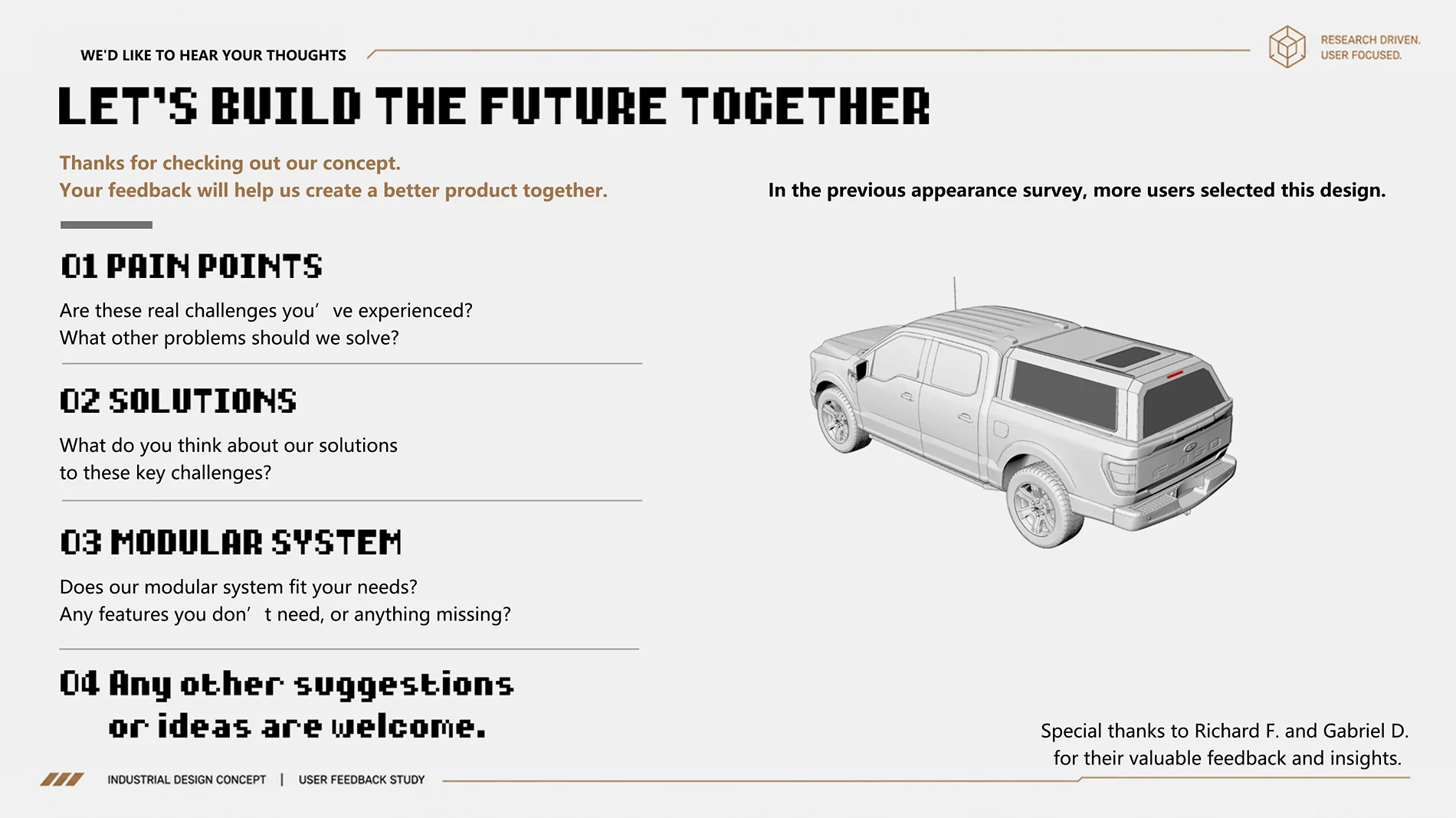
We Would Like Your Honest Feedback
1. Pain Points
Have you experienced any of these problems with a camper shell?
- Water leaks
- Dust enters the bed
- Condensation
- Excessive weight
- Difficult installation
- Poor storage organization
- Limited access to gear
2. Proposed Solutions
What do you think about the proposed solutions?
- Upgraded EPDM sealing
- Positive-pressure dust protection
- Side ventilation
- Insulated aluminum honeycomb panels
- Lightweight modular construction
- Factory-location mounting
3. Modular System
Does a staged modular system fit the way you would purchase and use a camper shell?
Which features would you choose first?
- Roof platform
- Side storage
- MOLLE panels
- Full-width table
- Half-width table
- Interior workstation
- Slide-out equipment panel
- Lighting
- Roof-tent access
- Insect-screen room
- Bicycle rack
What important feature is missing?
4. Specific Design Questions
We would especially appreciate your thoughts on these choices:
- Is an openable roof skylight useful, or is it an unnecessary sealing risk?
- Would you prefer a full-width or half-width flip-down table?
- Would you choose a large fixed MOLLE panel or a slide-out MOLLE panel?
- How important is positive-pressure dust protection?
- Would public dimensional drawings make you more likely to customize the system?
- Should the base model remain simple, or include more storage from the beginning?
Ideas, criticism, unusual use cases, and “you forgot the obvious part” comments are all welcome.
We would much rather discover a problem during concept development than after someone has installed the shell, driven through a storm, and learned that their sleeping bag now has the water retention of a kitchen sponge.
Thanks for taking a look and helping us shape the next version.
Sponsored