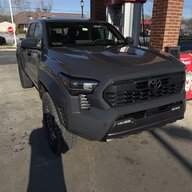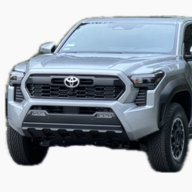


- Thread starter
- #1
Been deep in the intake research for the 2.4L and wanted to post something more useful than "here's my new intake." Some of the biggest brands in this segment are throwing codes on the 4th gen, and the failure modes split into two very different buckets that get conflated a lot here. Writing this up to compare notes with anyone else running on a standard-trim 4th gen or 6th gen 4Runner 2.4L.
Specific ask: if you've installed any aftermarket intake on a 2024-2026 standard-trim Tacoma, what codes have you seen (if any), and have your long-term fuel trims drifted from stock over time? Real iDash data beats marketing copy.

Two failure modes, one CEL

Both land as "check engine light after intake install" on the dash, but the fix for each is completely different.
Forum evidence, brand by brand
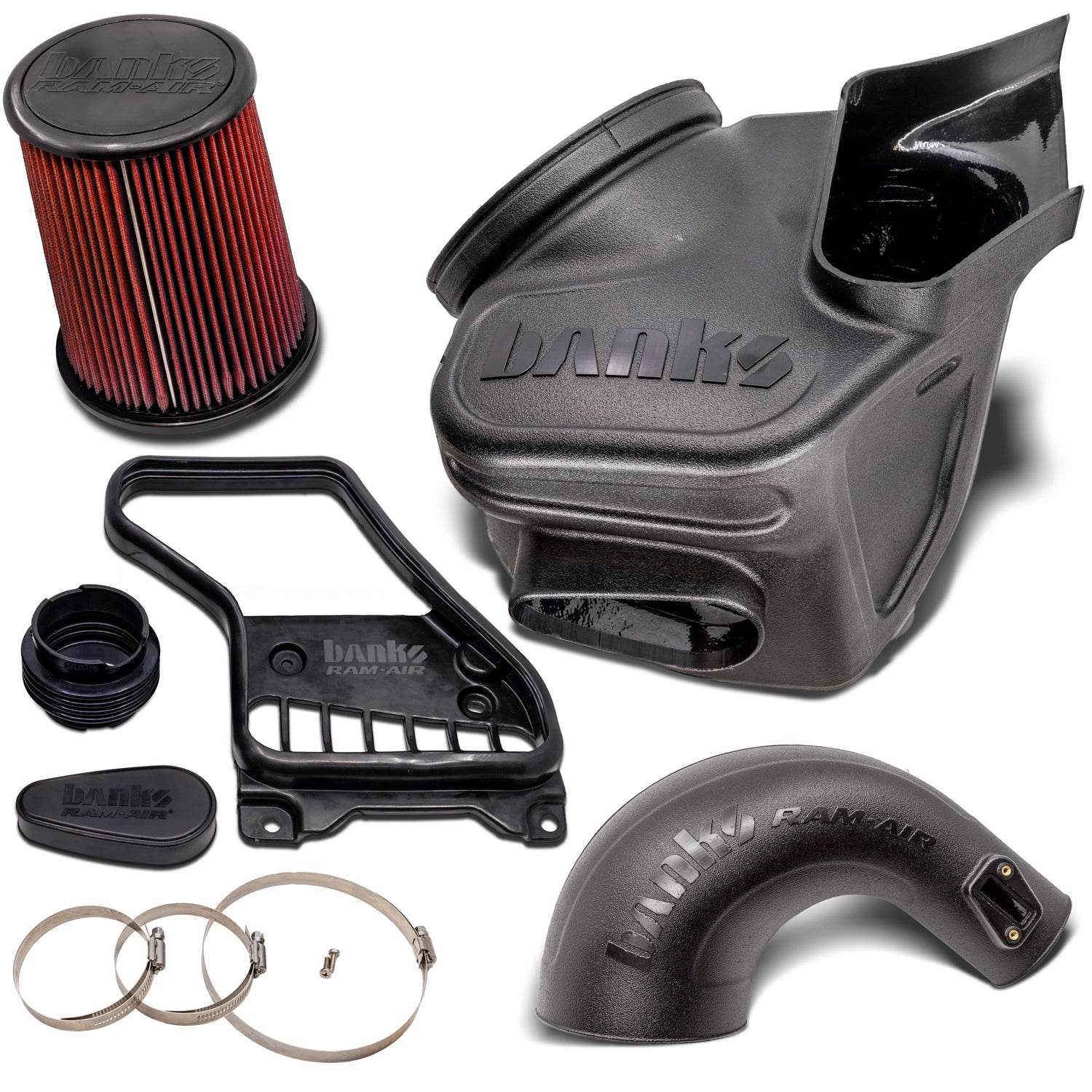
Why @Banks Power 42291 avoided both failure modes
Two engineering decisions on the 42291 map directly to the two failure modes above:
It's the only intake in this segment that lists "No Check Engine Light" as an explicit product claim, and it's CARB EO certified (D-161-172) for 2024-2025, 2026 pending.
Engineering numbers

Pressure loss is the number to pay attention to. Lower inlet restriction means the turbo compressor doesn't have to pull as hard for the same boost pressure, which translates to lower shaft speeds at a given power output. More power AND reduced turbo wear, because the compressor is working less to produce the boost.

Tube geometry, Banks' own side-by-side
Jay at Banks sent me their direct comparison of the intake tube section across Stock, Banks, K&N, Mishimoto, and SXTH. Fluid dynamics are worth looking at here: bend radius, cross-sectional area, material transitions.

Stock has an accordion-style flex section that disrupts laminar flow. Banks runs a large-diameter, gradual compound bend with the MAF boss molded in. K&N uses a sharp, small-radius bend. Mishimoto has silicone with step transitions at the clamps. SXTH narrows toward the outlet with a steeper bend angle. Sharp 90° bends cause boundary layer separation; Banks' gradual bends preserve the velocity of the air column across the full geometric area.
The scoop (a real engineering variable)
The scoop seals the housing against the underside of the hood. If it doesn't seal cleanly, hot engine-bay air bypasses the filter and enters the housing directly, which defeats the "cold air" part. Materials side-by-side:
Filter surface area

Banks' filter is the largest of the segment per their own published comparison (39% over K&N, 74% over Mishimoto, 87% over SXTH). More surface area = more dust holding capacity before airflow restricts. Meaningful for washboard and desert dust, less so for commuter driving.
Fitment and cost
Part #42291. $398 sale, $442.22 MSRP. Shipping today. CARB EO D-161-172 (2024-2025, 2026 pending). Fits 2024-2026 Tacoma 2.4L (Gas + Hybrid) and 2025-2026 4Runner 2.4L (Gas + Hybrid) on standard trims: SR, SR5, TRD Sport, TRD Off-Road, and Limited.
Explicitly not compatible with Trailhunter and TRD Pro. That's intentional, because those trims use a larger intake tube cross-section and Banks is finishing a trim-specific SKU (42292) for them.
For Trailhunter and TRD Pro owners
Banks is shipping a prototype 42292 for my 2024 Trailhunter in the next couple weeks. Engineered around the larger intake tube cross-section those trims use, keeps the factory desert snorkel in the circuit (unlike the SXTH, K&N, and Mishimoto kits that require snorkel removal), and includes a patented Slipper Fit design that accommodates filter and engine movement under articulation. Part 2 drops when it's installed on my truck with full iDash data, ambient-corrected dyno, and a real-world verdict.
If you're on a Trailhunter or TRD Pro right now, the honest answer is to wait. Banks' 42292 product page has a "Notify me when available" sign-up for the shipping alert.
Open questions for the community
Full writeup with every forum citation, the scoop construction breakdown, dyno charts, and the Ram-Air Effect explainer is on my blog: truck.bdigitalmedia.io/blog/banks-ram-air-intake-tacoma.
For product questions direct to Banks, they're also active in the Banks Power ELITE Sponsor subforum here.
Specific ask: if you've installed any aftermarket intake on a 2024-2026 standard-trim Tacoma, what codes have you seen (if any), and have your long-term fuel trims drifted from stock over time? Real iDash data beats marketing copy.
Two failure modes, one CEL
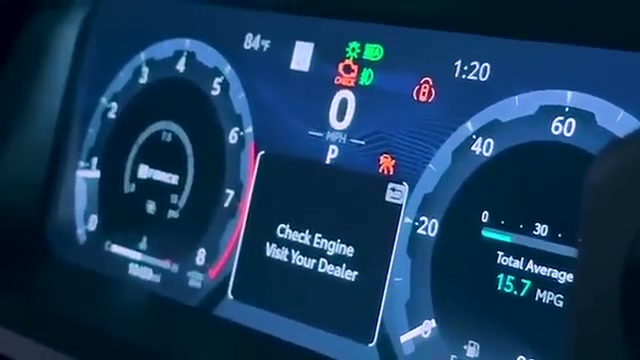
- MAF calibration mismatch. Stock MAF is calibrated around a specific airflow profile through the factory housing. An aftermarket design that changes flow laminarity or total mass flow without accounting for sensor placement drifts the reading outside the ECU's expected range, fuel trims drop outside ±10%, and the ECU flags P0101. Oiled-filter contamination on the hot-wire sensor is a separate cause of the same drift and compounds the problem over time.
- Turbo inlet and EVAP vacuum routing. Some kits reroute the crankcase vent and EVAP lines through fittings that don't seal cleanly at the turbo compressor inlet. Result is P2C90 (turbocharger/boost control) codes that look like a MAF issue but aren't.
Both land as "check engine light after intake install" on the dash, but the fix for each is completely different.
Forum evidence, brand by brand
- K&N 63-series, turbo inlet / EVAP flavor. Tacoma4G thread: Ace-ington on a 2024 TRD Sport reports that even after K&N shipped warranty replacement parts, the truck still threw P2C90. LT fuel trims at -12% with the K&N installed, back to 0% on stock. Thread starter Drifte on the same thread: "Where those vacuum hoses all tie together is a mess, and the provided hose too small i.d. to fit on." Turbo-inlet-side problem, not a MAF issue.
- SXTH Element CPLT, MAF drift without CEL. 4Runner6G thread: a 2025 TRD Off-Road Premium owner didn't throw a code but saw MAF live data drift outside spec after installing the SXTH. That's the kind of drift that often precedes a code or shortens long-term engine health even when no light surfaces.
- Stillen TruPower, MAF flavor. Tacoma4G Stillen thread: a 2024 TRD Off-Road owner describing limp mode on the freeway after 75 miles with the dry filter and no scoop. OTT developed a calibration specifically for this intake, despite Stillen marketing it as "no tune required."
- aFe Momentum GT, captured in the 4Runner6G PSA thread around the Trailhunter/TRD Pro MAF housing differences, which also applies to Pro-trim aFe installs flagging engine-power-reduced faults.
Why @Banks Power 42291 avoided both failure modes
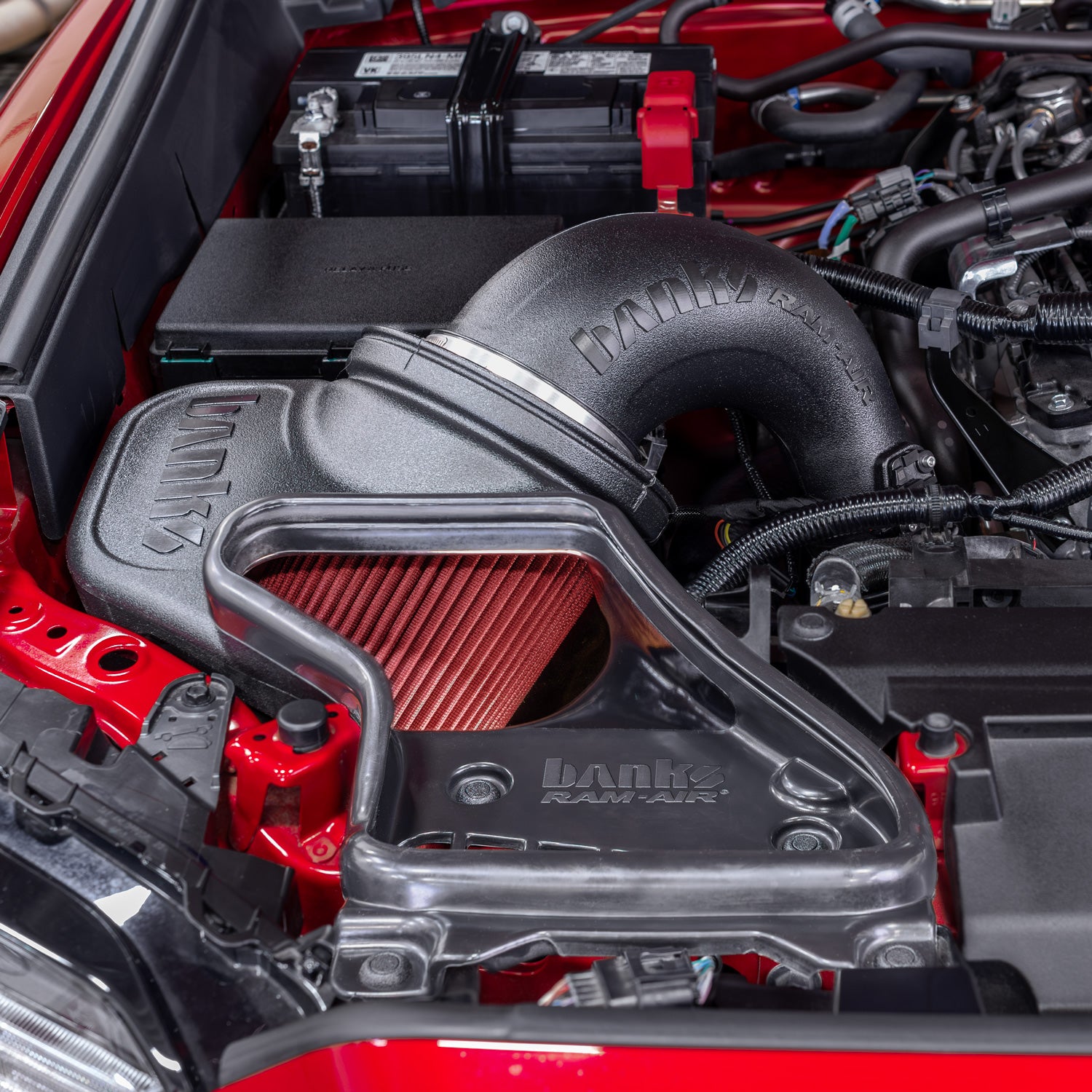
Two engineering decisions on the 42291 map directly to the two failure modes above:
- MAF sensor relocation. Moved from inside the airbox (filter-pleat turbulence hits the hot wire) to the bottom of the intake tube where airflow is smoother. Housing volume and tube geometry are engineered so the MAF reading profile stays within the factory ECU's expected range even with +8 lb/min of additional mass flow.
- Factory vacuum routing preserved. The kit doesn't introduce new adapter fittings at the turbo compressor inlet. Crankcase vent and EVAP connections stay as stock, which is why forum reports on Banks don't include the P2C90 boost-control code showing up on K&N installs. If you want to upgrade that section deliberately, Banks sells the Monster-Ram turbo inlet (#26011) as a separate, validated kit rather than rolling it into the intake. bankspower.com/products/monster-ram-turbo-inlet-42840-for-2024-toyota-tacoma-2-4l
It's the only intake in this segment that lists "No Check Engine Light" as an explicit product claim, and it's CARB EO certified (D-161-172) for 2024-2025, 2026 pending.
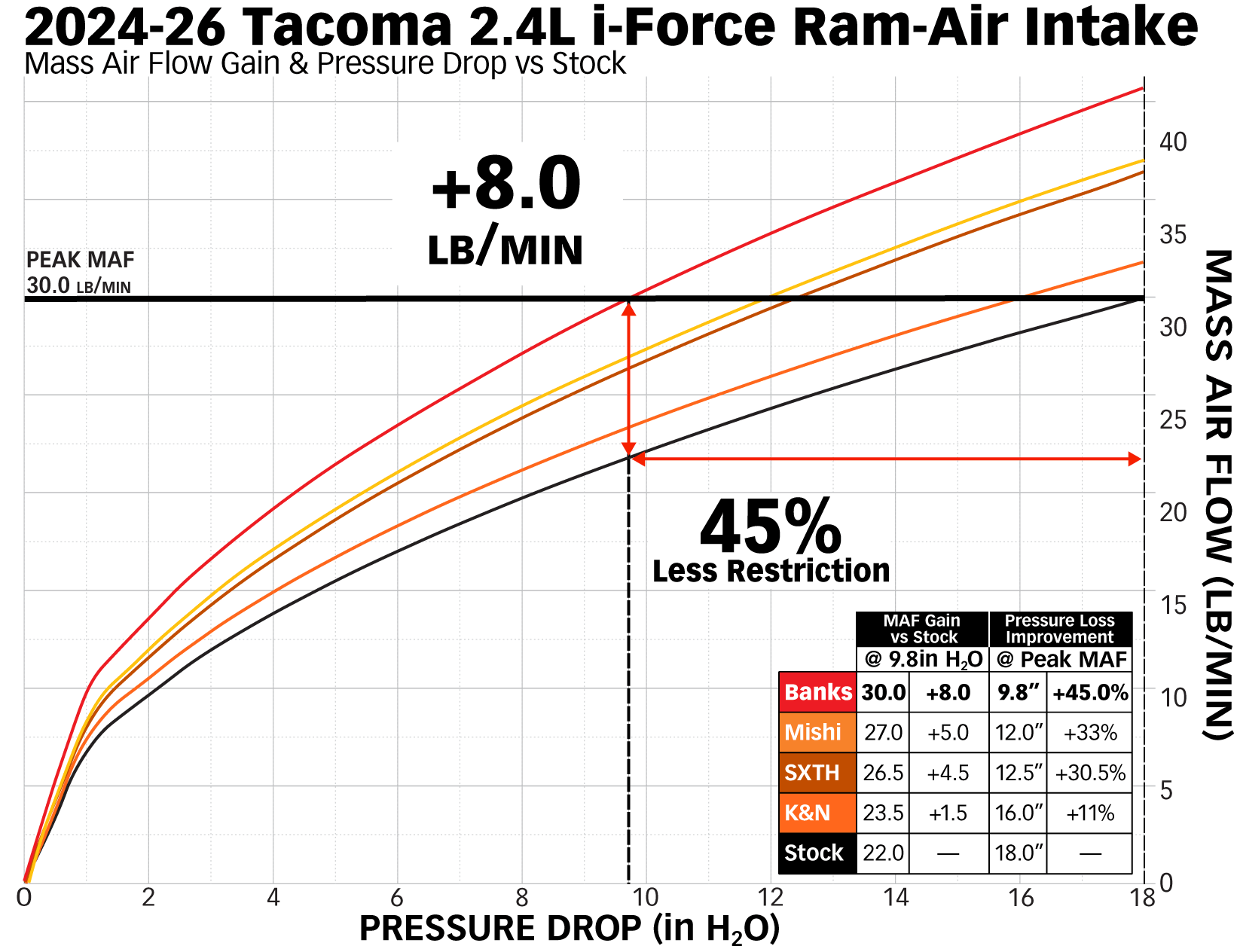
Engineering numbers
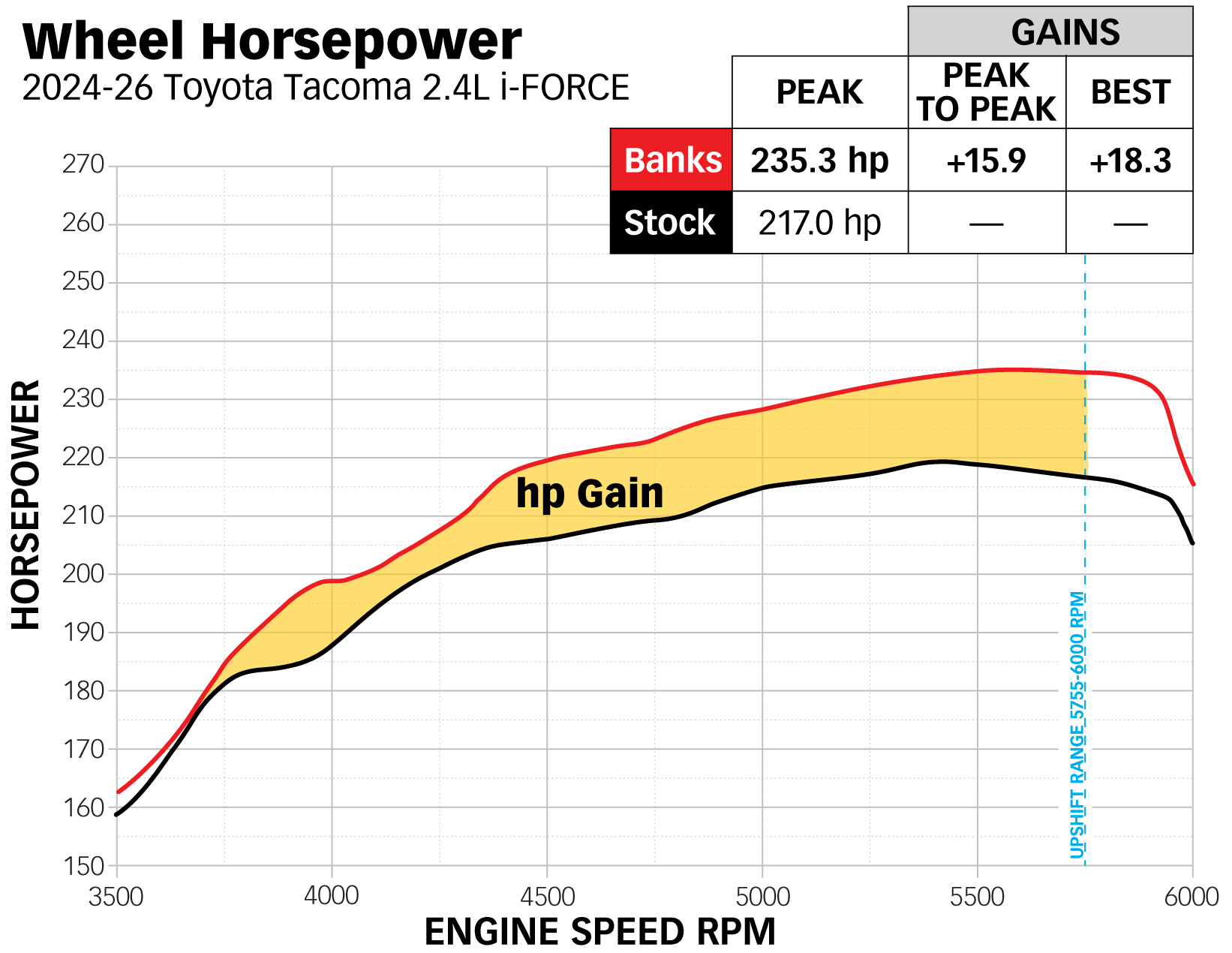
- +18.3 hp, +17.7 lb-ft (dyno-tested)
- 45% lower pressure loss vs. stock (measured at peak MAF demand)
- +8 lb/min MAF gain
- 72% larger Ram-Air duct vs. OEM
- 37% greater flow vs. stock
Pressure loss is the number to pay attention to. Lower inlet restriction means the turbo compressor doesn't have to pull as hard for the same boost pressure, which translates to lower shaft speeds at a given power output. More power AND reduced turbo wear, because the compressor is working less to produce the boost.
Tube geometry, Banks' own side-by-side
Jay at Banks sent me their direct comparison of the intake tube section across Stock, Banks, K&N, Mishimoto, and SXTH. Fluid dynamics are worth looking at here: bend radius, cross-sectional area, material transitions.
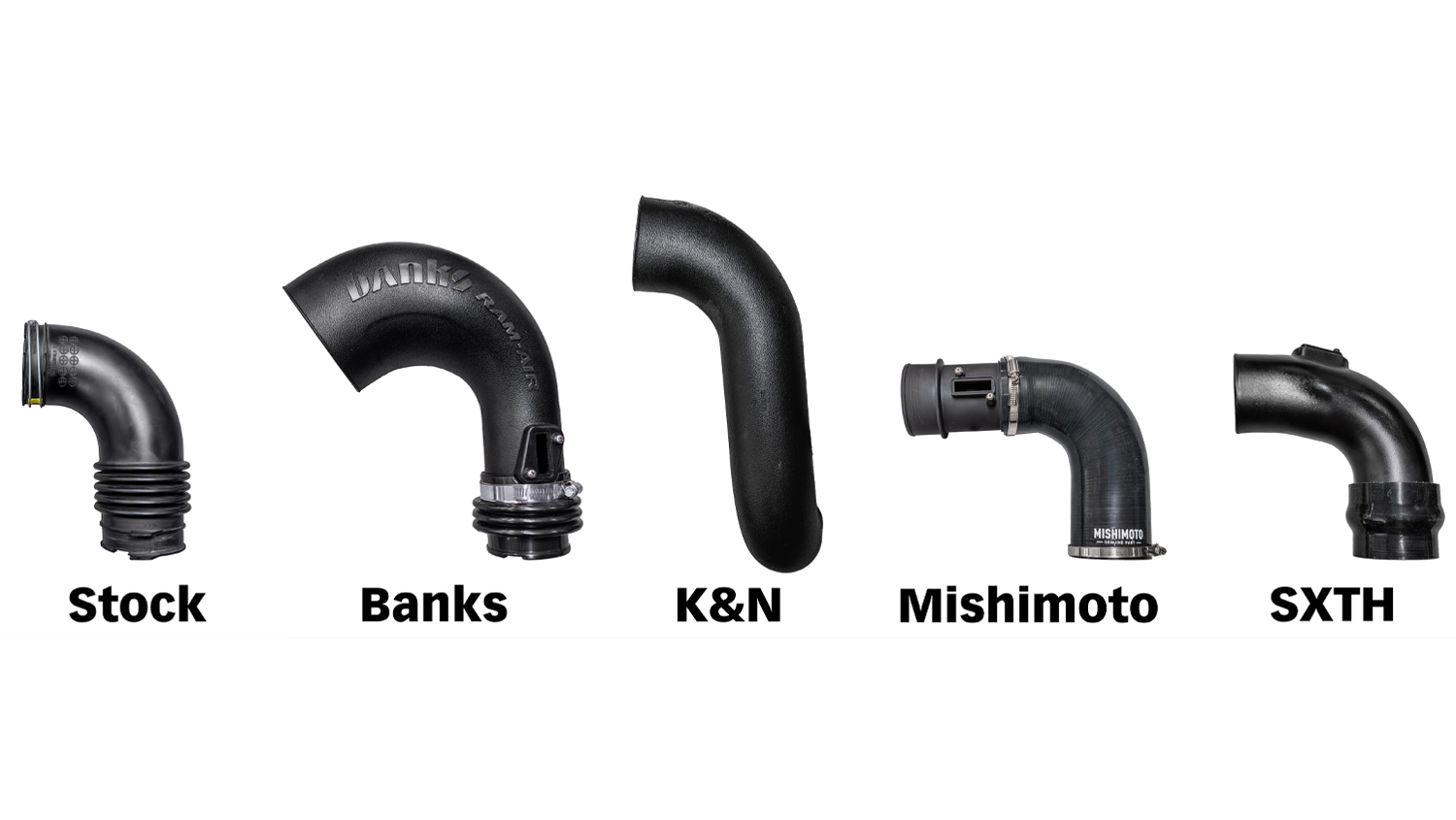
Stock has an accordion-style flex section that disrupts laminar flow. Banks runs a large-diameter, gradual compound bend with the MAF boss molded in. K&N uses a sharp, small-radius bend. Mishimoto has silicone with step transitions at the clamps. SXTH narrows toward the outlet with a steeper bend angle. Sharp 90° bends cause boundary layer separation; Banks' gradual bends preserve the velocity of the air column across the full geometric area.
The scoop (a real engineering variable)
The scoop seals the housing against the underside of the hood. If it doesn't seal cleanly, hot engine-bay air bypasses the filter and enters the housing directly, which defeats the "cold air" part. Materials side-by-side:
- Banks: injection-molded silicone, form-fitting to the hood bottom.
- SXTH: rubber molding of the type typically found in door trim.
- Mishimoto: square foam with double-stick tape (per Banks' teardown, peeling out of the box).
- K&N: re-uses the factory "sink trap" inlet with a 90° open entry and a 180° turn into the housing from below. Separately, the top of the K&N housing is foam rather than a sealed rigid lid, so hot engine-bay air enters from above. By the functional definition of a cold air intake (a sealed enclosure isolating the filter from engine-bay heat), the K&N 63-series doesn't qualify.
Filter surface area
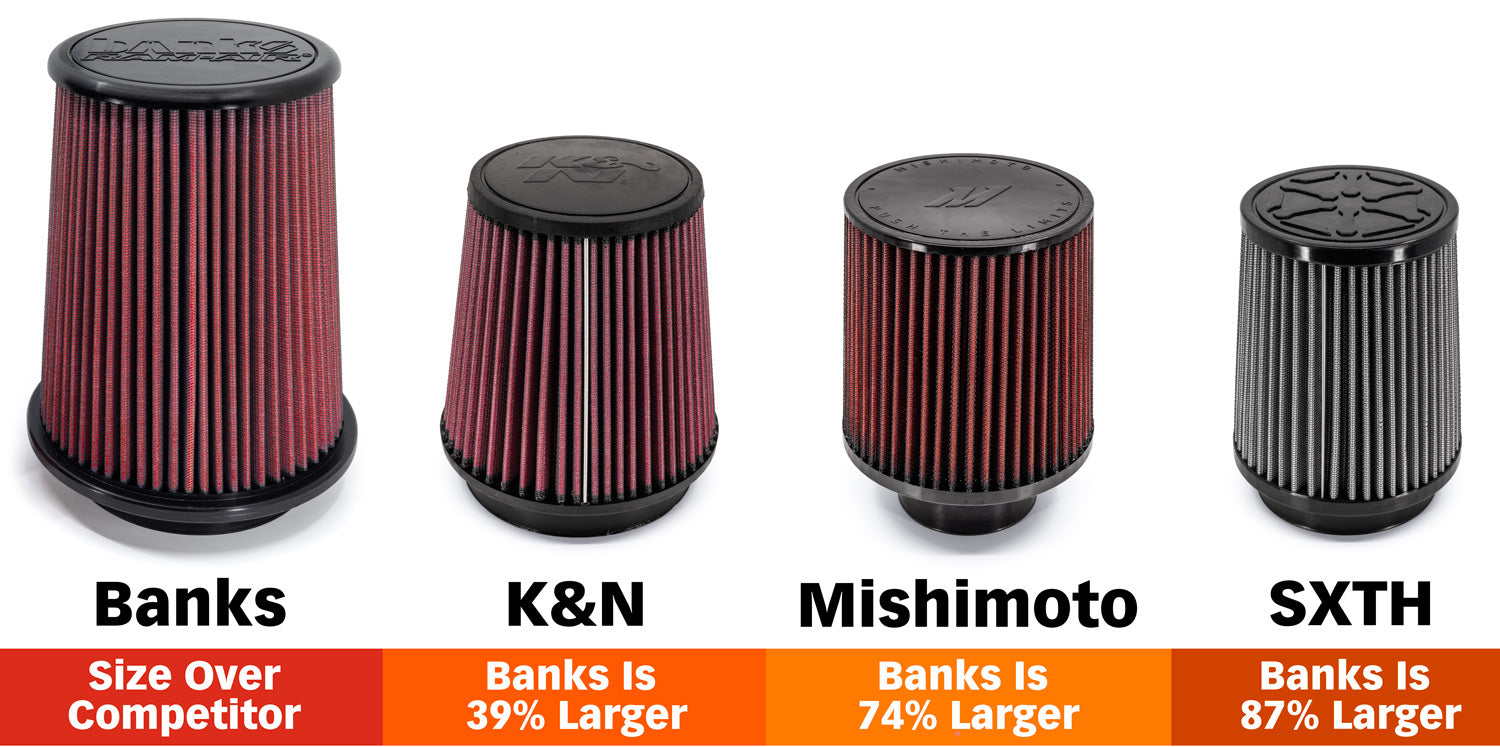
Banks' filter is the largest of the segment per their own published comparison (39% over K&N, 74% over Mishimoto, 87% over SXTH). More surface area = more dust holding capacity before airflow restricts. Meaningful for washboard and desert dust, less so for commuter driving.
Fitment and cost
Part #42291. $398 sale, $442.22 MSRP. Shipping today. CARB EO D-161-172 (2024-2025, 2026 pending). Fits 2024-2026 Tacoma 2.4L (Gas + Hybrid) and 2025-2026 4Runner 2.4L (Gas + Hybrid) on standard trims: SR, SR5, TRD Sport, TRD Off-Road, and Limited.
Explicitly not compatible with Trailhunter and TRD Pro. That's intentional, because those trims use a larger intake tube cross-section and Banks is finishing a trim-specific SKU (42292) for them.
For Trailhunter and TRD Pro owners
Banks is shipping a prototype 42292 for my 2024 Trailhunter in the next couple weeks. Engineered around the larger intake tube cross-section those trims use, keeps the factory desert snorkel in the circuit (unlike the SXTH, K&N, and Mishimoto kits that require snorkel removal), and includes a patented Slipper Fit design that accommodates filter and engine movement under articulation. Part 2 drops when it's installed on my truck with full iDash data, ambient-corrected dyno, and a real-world verdict.
If you're on a Trailhunter or TRD Pro right now, the honest answer is to wait. Banks' 42292 product page has a "Notify me when available" sign-up for the shipping alert.
Open questions for the community
- Anyone on Banks 42291 long-term on a standard trim, what are your iDash numbers after 10k+ miles? Specifically LT fuel trims, MAF drift, filter loading.
- Anyone who installed K&N, aFe, SXTH, or Stillen and didn't throw a code, what trim + year, and have you scanned for pending codes that just haven't surfaced as a CEL yet?
- Anyone on a Trailhunter or TRD Pro already on the 42292 notify list, drop a note, happy to compare iDash numbers once we're both installed.
Full writeup with every forum citation, the scoop construction breakdown, dyno charts, and the Ram-Air Effect explainer is on my blog: truck.bdigitalmedia.io/blog/banks-ram-air-intake-tacoma.
For product questions direct to Banks, they're also active in the Banks Power ELITE Sponsor subforum here.
Sponsored
Last edited: