


- Thread starter
- #1
Loading...
Sponsored
Last edited:

Dexos is a GM oil spec, and they have different variants of the dexos spec. The original dexos spec was an acidity neutralizer. This Mobil 1 oil is great… changing the oil more often than 10k miles help to eliminate the problem that extended range oils battle with- liquid contaminants. Changing the oil every 5k miles is much better for the helping the condition of the oilIs this a good option for oil for my non-hybrid? (Only $31 at Costco)
My last truck was GM, and you had to make sure you bought oil with the Dexos certification. I don’t believe the Tacoma has requirements but I wasn’t sure.
This oil below is “advanced fuel economy”. I usually just get the normal version but not sure if this is inferior
View attachment 33440

This is what I'm using. It's meets ILSAC GF-6A.Is this a good option for oil for my non-hybrid? (Only $31 at Costco)
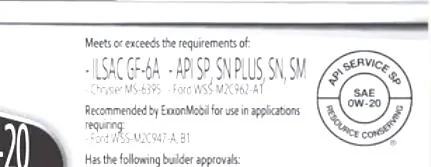


It's got a lot of moly compared to stuff you can get at AutoZone. While in warranty I'd use Toyota oil, and change it every 5k.Toyota that is supposed to be very good
Please do not mislead folks. This is flat false.It's got a lot of moly compared to stuff you can get at AutoZone. While in warranty I'd use Toyota oil, and change it every 5k.
After warranty (for me 125k) I'm going to switch to Motul 5w30. No need for extreme cold weather 0w in California. Higher base weight will always have better hot protection.
 At Operating Temperature
Chill with the AI response.Please do not mislead folks. This is flat false.
The base weight (for example, the “10” in 10W-30) refers to the oil’s viscosity at cold temperatures — how thick it is before it warms up. A higher base number (like 15W vs 5W) means the oil is thicker when cold.
Once the oil reaches full operating temperature (~100 °C or 212 °F), the second number (e.g., the “30” in 10W-30) is what determines viscosity and protection under normal running conditions.
That means:
- 5W-30 and 10W-30 have roughly the same viscosity and film strength at full temperature.
- The difference is mainly how they behave when cold — 5W flows faster at startup.



Lighter base stock is gonna burn easier / evaporate more and not provide as much protection when hot.This isn't complicated stuff. A higher base weight oil does not offer better hot-temperature protection because the operating-temperature viscosity grade and oil chemistry are what control that, not the starting viscosity when cold.
Base weight is the first number, used to determine cold viscosity (cold-flow rating).
The second number is your hot viscosity.
By your logic if I live in a warm climate I'd be better off with straight 30 weight oil (or 20 if that's what the vehicle calls for). Does anyone do this.... no. No one does this as a higher base weight doesn't give any extra protection once hot.
At full temperature protection depends on hot viscosity grade, base oil "quality", additive package (anti-wear agents like ZDDP, detergents, dispersants, etc.), film strength and shear stability (how well viscosity modifiers hold up under stress).
I don't need to be a subaru fan (and I am). I also work in the auto industry and have for over three decades. I'm not arguing the above, it's well established fact that anyone can google.