
- Thread starter
- #1
I'm about to spend $8,500 of my own money on Fox's 3.2 Live Valve kit for the Tacoma. Not sponsored. Not gifted. Cash out of pocket.
My current setup is no slouch. Custom valved Kings with reservoir adjusters, valving built specifically for my truck. It performs well. But every time the terrain changes, the valving stays the same. And my usage is all over the place.
Some weekends I'm in Johnson Valley trying to keep up with Jay and his long travel Tundra. Other days I'm crawling rocks near Table Mesa. Last January I drove 20 hours to Bozeman in -15 degree temps to pick up a Go Fast camper. Tuesday I'm racing across town to drop the kids at football practice. Sometimes I want soft and comfortable at 85 on the freeway. Other times I want every bit of damping the shocks can give me.
Nothing on the aftermarket lets you toggle between desert racing mode, rock crawling mode, highway mode, and kid-shuttle mode from inside the cab while driving. That's what Live Valve claims to do.
SDHQ is pulling the Kings and installing Fox's Live Valve next month. Before that happens, I wanted to understand every component in the box. Fox published two Tacoma-specific install videos with barely 800 views combined. I pulled both apart frame by frame.
What's in the kit
Five categories of hardware. Four shocks, one brain, one sensor, one controller, and a lot of wiring.
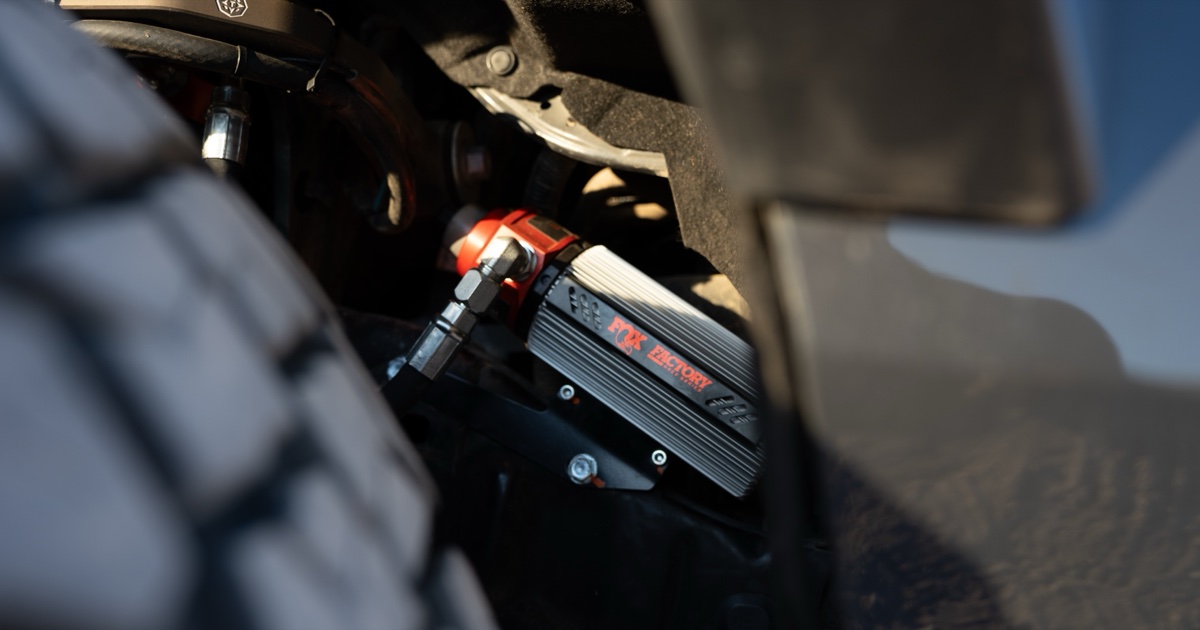
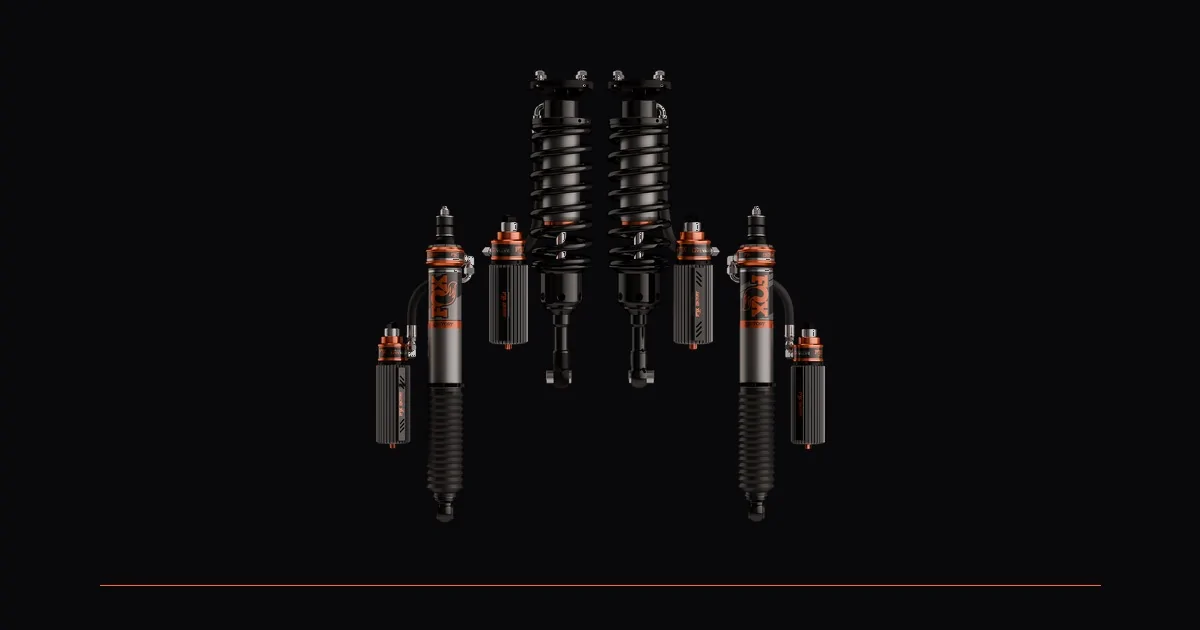
Factory Race Series 3.2 Internal Bypass Coilovers (front pair). Internal bypass means the shock body has ports machined at specific intervals along the inside wall. As the piston moves through its stroke, it passes these ports. Early in the stroke, fluid bypasses through open ports keeping damping soft. Deeper in, fewer ports are open so resistance increases progressively. Same design Fox uses in Baja. Each shock also has an electronic solenoid valve that controls compression damping in real time by restricting or opening fluid flow.
Factory Race Series 3.2 Internal Bypass Shocks (rear pair). Same architecture. Stem mount with rubber bushings on top, eyelet on bottom. Each gets its own solenoid. Four shocks, four solenoids, four corners of independent damping control.
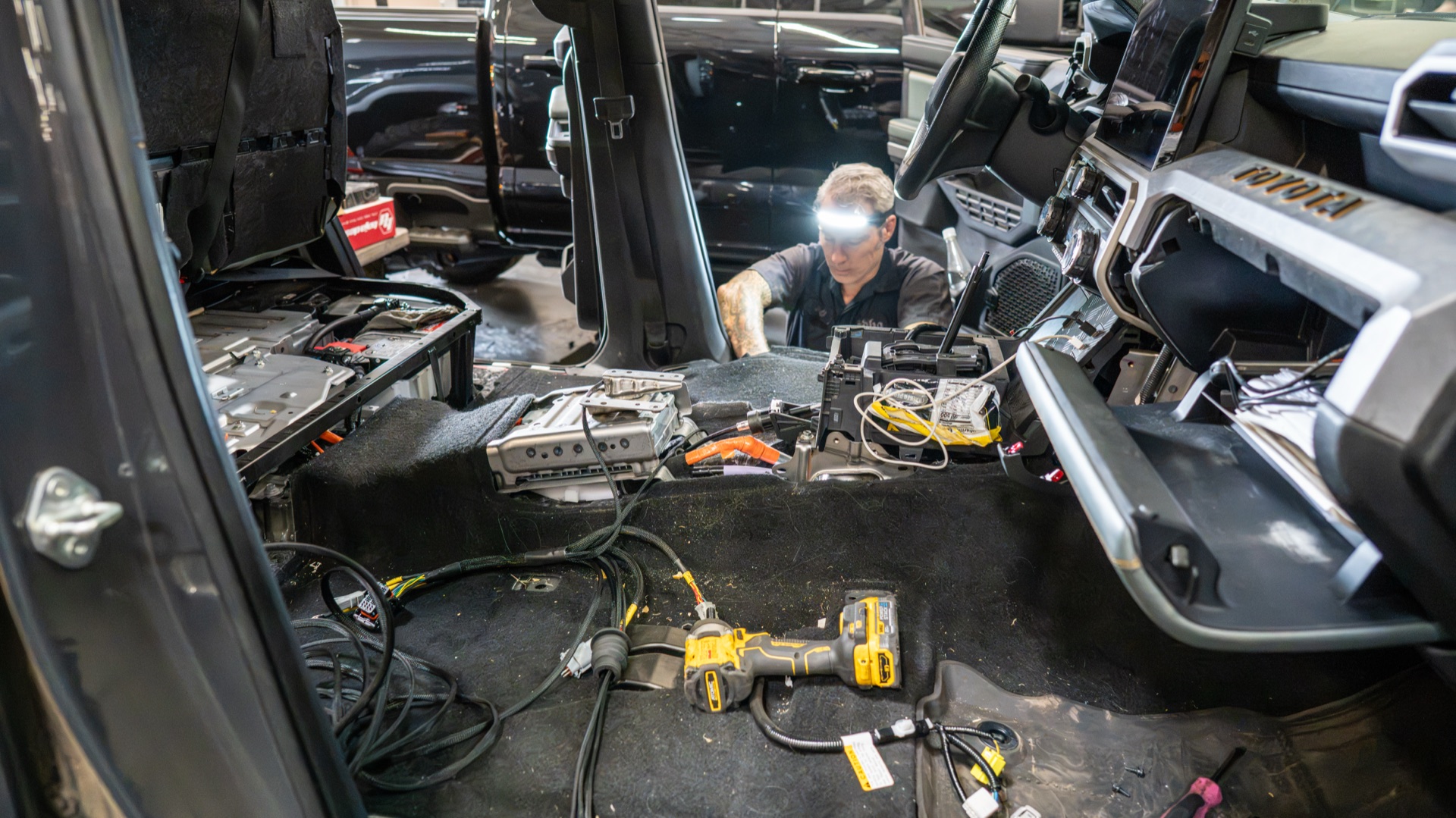
ECU. Mounts under the driver's carpet, bolted to a bracket between the seat bolts and floor. Houses Fox's Live IQ algorithm. Receives data from the IMU and CAN bus, calculates damping force at each wheel independently, signals each solenoid. Fractions of a second.
IMU. Accelerometers and gyroscopes measuring pitch (nose up/down), yaw (rear end stepping out), and roll (body lean). Mounts in the center console on a bracket with double-sided tape. 70 in-lb.
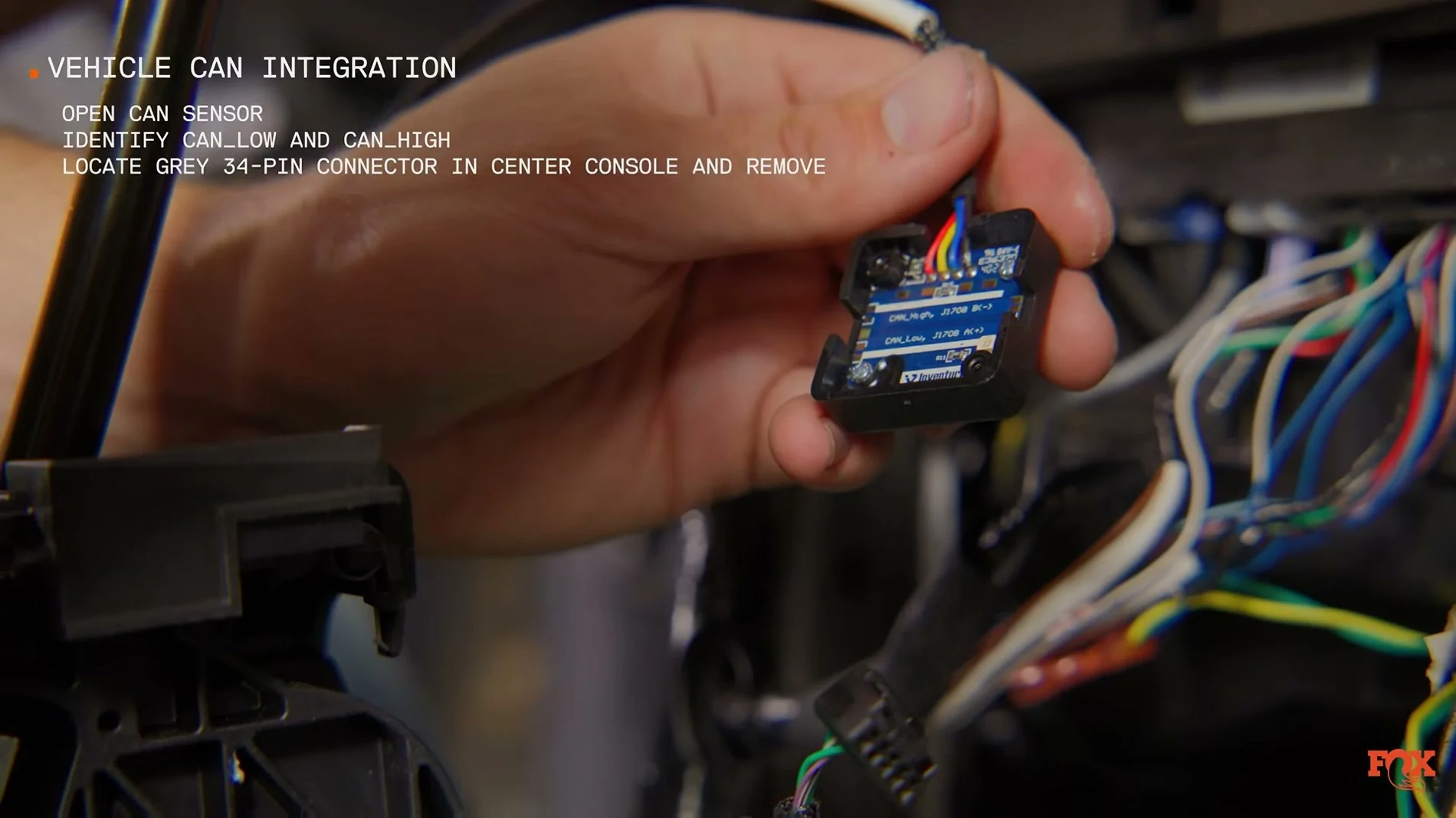
CAN Sensor. Taps into the Tacoma's data network. Reads speed, steering angle, brake pressure, throttle. Clamps onto two wires (pin 25 CAN High, pin 26 CAN Low) on a gray 34-pin connector behind the center console. No cutting. No splicing.
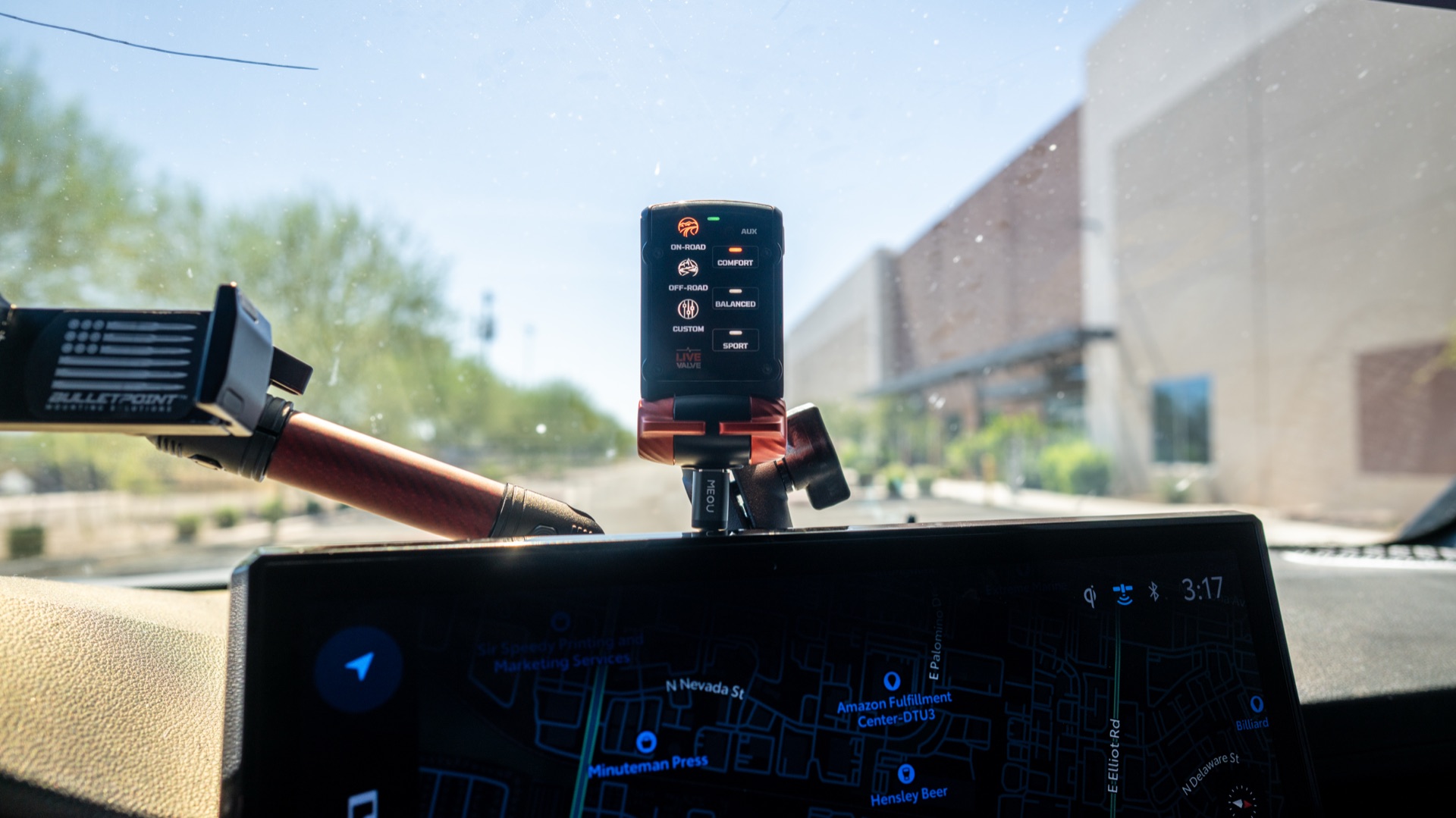
Mode Selector. Red dial, mounts left of the steering wheel. On-Road, Off-Road, Custom. Bluetooth. Press start/stop 11 times to pair (seriously).
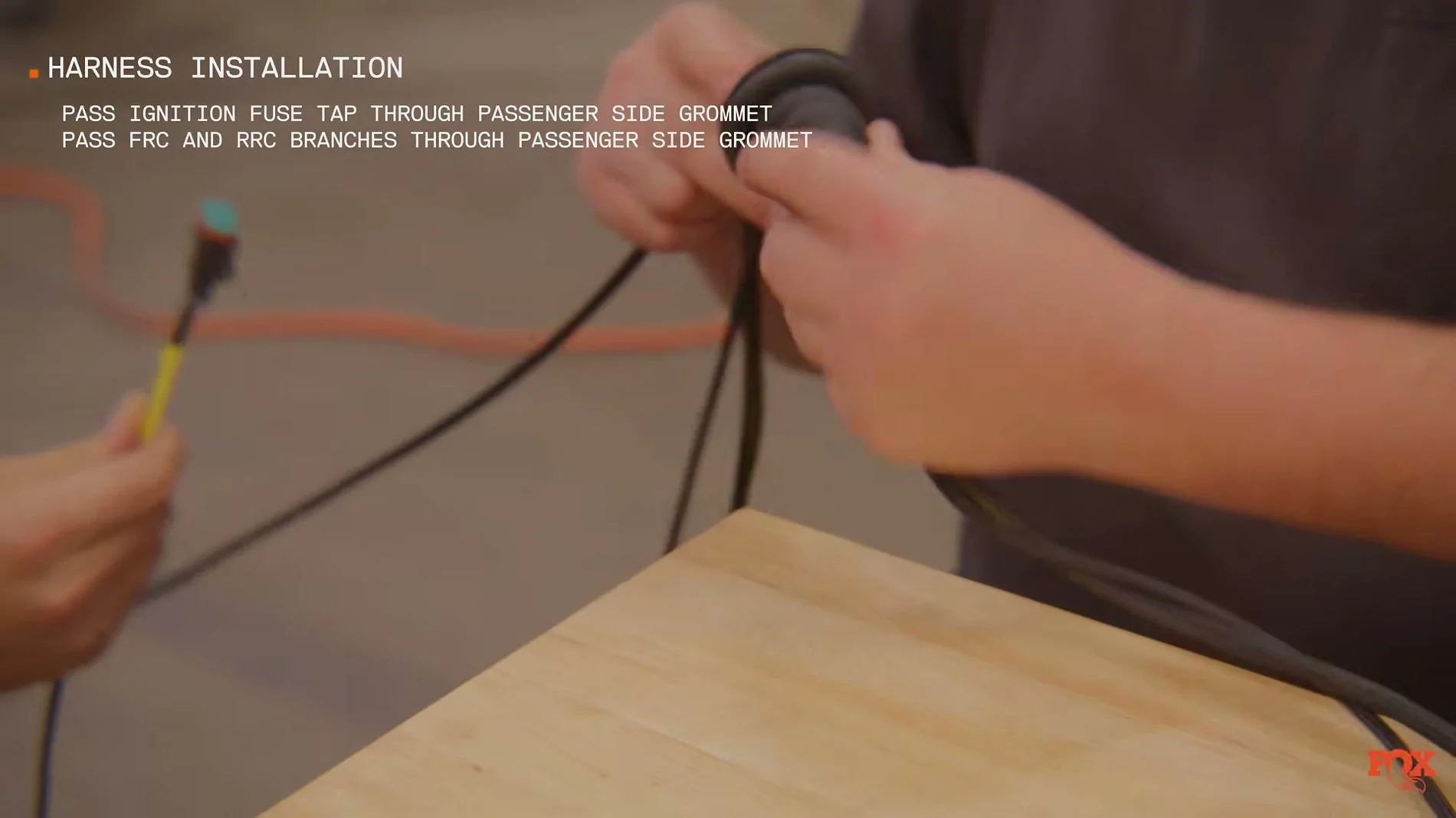
Wiring loom. Labeled branches to all four corners: FLC, FRC, RLC, RRC, plus IMU, CAN, sensor, power, and ignition. Includes grommets, zip ties, a 3-amp fuse, and an ignition fuse tap for slot F5.
This isn't new tech
Fox has run semi-active damping in Baja and Ultra4 for years. Ford put Live Valve in every Raptor starting in 2019, Bronco Raptor since 2021. Polaris runs it on the RZR factory. What's new is Fox selling it as a bolt-on aftermarket kit. Tacoma owners can now buy what Raptor owners got standard.
The jump detection that makes Raptor landing videos look effortless? Same system. IMU senses vertical unloading when you go airborne, ECU pre-softens compression before you hit the ground. Sensors sample at 400Hz. Damping responds in milliseconds.
What the sensors actually do
Each sensor input unlocks something passive shocks can't replicate.
Brake pressure: system knows you're decelerating before the nose dives. Increases front compression to resist dive, keeps the chassis level. On trail, that means controlled descents instead of the front end plowing.
Throttle: increases rear compression under acceleration to prevent squat. Launch out of a wash crossing, the rear stays planted.
Steering angle: increases compression on outside shocks to resist body roll. Harder turn, more resistance. Each corner independent so a sweeping high-speed turn and a tight switchback get different responses.
Vehicle speed: at highway speed, low compression for comfort. At crawling speed, softens for maximum articulation. At desert speed, firms up to resist bottoming.
Pitch, yaw, roll from the IMU: real-time picture of chassis rotation in three dimensions. Off-camber section? Stiffens uphill shocks, softens downhill to keep the truck planted.
Vertical G-force: detects big impacts, jumps, G-outs. Drop off a ledge and shocks reduce compression to absorb the landing instead of kicking back.
All of this simultaneously. Four independent corners, 400Hz sensor sampling, millisecond response.
The install
Shock swap is straightforward. 3-4 hours if you've done coilovers. Top hat nuts to 24 ft-lb, reservoir clamps to 76 in-lb.
The electrical side is where it gets real. Fox's video runs 19 minutes. Both front seats come out. Entire center console gets pulled. Gear selector removed. Wiring routes through holes in the cab floor, down the frame rails to each shock. CAN bus tap, IMU mounting, ECU under the carpet, power to the hybrid battery, ignition fuse tap at slot F5.
Plan 5-6 hours for the electrical side alone.
Fox Connect app
Real-time telemetry (speed, steering, throttle, suspension compression). Vehicle dynamics widget showing which algorithm elements are active. GPS-mapped ride data. And over-the-air updates so Fox can push new tuning profiles after purchase.
Software-defined suspension. The kit gets better after you buy it.
Is $8,500 worth it
Don't know yet. Fox 2.5 Elites run about $3k. King 2.5s around $4,500. BP51s around $3,500. Live Valve is nearly double the most expensive passive option. But it's not just a shock. It's four shocks plus an entire electronic control system that adjusts independently per corner based on what the terrain and your driving are doing right now.
Nobody with a Fox 2.5 Elite or King 2.5 is going to stop on a trail, crawl under the truck, and dial compression softer for washboard, then stiffer for rocks, then balanced for the highway drive home. Live Valve does all three automatically.
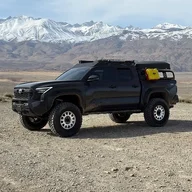
My Trailhunter is on 74Weld portal axles and 37-inch Toyo RT Pros. Performance is the priority. That's why I'm spending my own money to find out if this thing is real.
Part two will be the SDHQ install. Part three will be on-trail data, including how Live Valve behaves on portals, which nobody has tested.
Full technical breakdown with all install details and torque specs: truck.bdigitalmedia.io/blog/fox-live-valve-tacoma-breakdown
Anyone else looking at these? What would make you pull the trigger?
Follow the build: @portal.hunter | truck.bdigitalmedia.io
Sponsored