


I feel like Glenn Beck, breaking out the chalkboard here lol
Let's have a look at the specs:

Other than the Kinematic Viscosity ratings being different (understandably so), the only other data points that stick out to me are CCS and MRV. What do those ratings mean exactly?
CCS (Cold Crank Simulator) and MRV (Mini-Rotary Viscometer) are two different tests used to measure oil viscosity at low temperatures—but they focus on different things and catch different problems.
• CCS viscosity measures how thick the oil is when it’s being pumped hard and fast—like cranking a cold engine. It simulates the resistance the starter motor fights against. Lower CCS numbers mean easier starting in freezing weather. It’s tested at around -5°C to -35°C (depending on the grade), and it’s all about shear stress under high speed.
• MRV viscosity checks for pump-ability. It looks at how well the oil flows slowly through tiny passages—like oil pump pickup tubes—after sitting cold for hours. If it gels or forms wax crystals, it can starve the engine even if CCS looks okay. MRV uses a slower shear rate, and failure here means “pumpability” issues, not just cranking.
The MRV is the viscosity in centipoise (cP) at a super-cold temp (like -20°C or -35°C, depending on the grade). A lower reading means the oil flows easier under that slow, low-shear condition—less resistance, less chance of gelling or starving the pump. If your MRV is 10,000 cP versus 20,000 cP, the 10k oil pumps way better when it’s ice-cold. Higher numbers = thicker = worse pumpability.
Quick cheat sheet:
• CCS = “Will it start?” (high-shear, cranking); lower rating number is better
• MRV = “Will it flow to the pump?” (low-shear, after soaking); lower rating number is better
A good oil passes both—CCS keeps it cranking, MRV keeps it fed. Miss MRV, and you might get a dry start even if the starter spins.
What's your take on the data, between these two grades of oil??
Let's have a look at the specs:
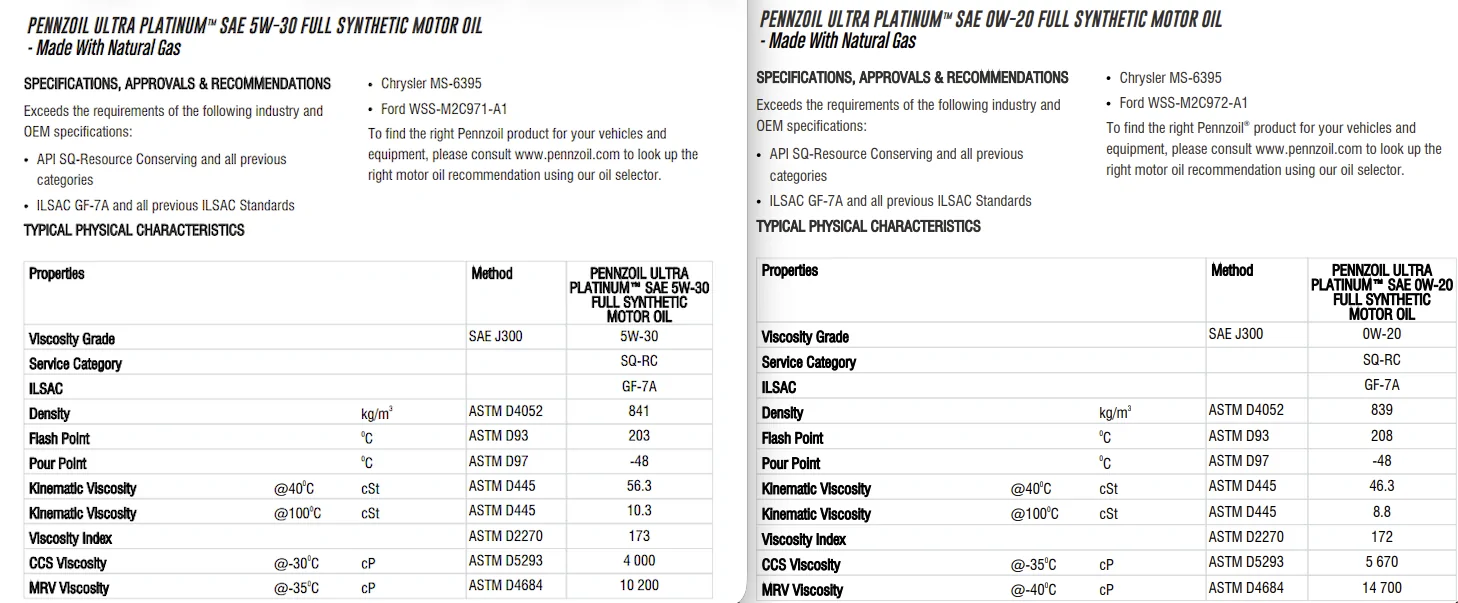
Other than the Kinematic Viscosity ratings being different (understandably so), the only other data points that stick out to me are CCS and MRV. What do those ratings mean exactly?
CCS (Cold Crank Simulator) and MRV (Mini-Rotary Viscometer) are two different tests used to measure oil viscosity at low temperatures—but they focus on different things and catch different problems.
• CCS viscosity measures how thick the oil is when it’s being pumped hard and fast—like cranking a cold engine. It simulates the resistance the starter motor fights against. Lower CCS numbers mean easier starting in freezing weather. It’s tested at around -5°C to -35°C (depending on the grade), and it’s all about shear stress under high speed.
• MRV viscosity checks for pump-ability. It looks at how well the oil flows slowly through tiny passages—like oil pump pickup tubes—after sitting cold for hours. If it gels or forms wax crystals, it can starve the engine even if CCS looks okay. MRV uses a slower shear rate, and failure here means “pumpability” issues, not just cranking.
The MRV is the viscosity in centipoise (cP) at a super-cold temp (like -20°C or -35°C, depending on the grade). A lower reading means the oil flows easier under that slow, low-shear condition—less resistance, less chance of gelling or starving the pump. If your MRV is 10,000 cP versus 20,000 cP, the 10k oil pumps way better when it’s ice-cold. Higher numbers = thicker = worse pumpability.
Quick cheat sheet:
• CCS = “Will it start?” (high-shear, cranking); lower rating number is better
• MRV = “Will it flow to the pump?” (low-shear, after soaking); lower rating number is better
A good oil passes both—CCS keeps it cranking, MRV keeps it fed. Miss MRV, and you might get a dry start even if the starter spins.
What's your take on the data, between these two grades of oil??
Sponsored