

Sponsored

What to do for increasing efficiency and longevity

CBarclay

TRD Off-Road Premium
Member
First Name
Chris
Joined
May 29, 2026
Threads
2
Messages
5
Reaction score
13
Location
NC
Vehicle(s)
TRD OR
Hey everyone,
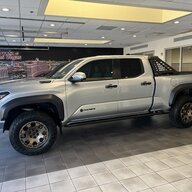
I just got a 25 and am new to the forum. I want to make sure to care for it well and make modifications necessary to help with efficiency and longevity.
With my setup, I’m currently averaging 14.7 mpg and feel like it can do better.

I’m no mechanic or engineer but if I understand correctly, CAI, boost tubes and tunes help with power as well as system functionality. Do I understand correctly that in doing so they also help with how efficiently the systems work? If so, would one of these,, or something else help with fuel and functional efficiency? From what I’ve read, the manufacturers concentrate more on power, sound, performance, etc. I’m happy with all that as is and am a relaxed driver for the most part. But if there’s something I can do to help with efficiency, I’d love to go that direction especially for cross country trips.
Thanks for any help and guidance!
Sponsored


 

Echoedlite

TRD Off-Road
Well-known member
Joined
Oct 19, 2023
Threads
3
Messages
51
Reaction score
46
Location
Wisconsin
Vehicle(s)
2024 Tacoma TRD Offroad Long Bed


This is a good guide for general mpg 'hacks'
As for 4th gen tacomas, I've found keeping your tire pressure at mid 30s, driving at the speed limit to keep RPMs low, as well as just being light on the pedal when pulling away.

On the new trucks it can take quite some time for your mileage estimate for your miles to empty gauge to really calibrate. Bed caps and tonneau covers seem to help to but thats only something I've noticed without being able to prove it.
 

Mercedes

TRD Sport
Member
Joined
May 27, 2026
Threads
0
Messages
10
Reaction score
8
Location
≈39N
Vehicle(s)
2026 TRD Sport "Mercedes"
Tunes are more for performance than reliability.

CAI can offer a few additional HP, which most often translates to decreased fuel economy.

If you're looking for longevity and fuel efficiency, I'd...

- Follow the maintenance schedule

- Use replacement parts that meet or exceed Toyota's recommendations

- Use a Top Tier fuel

- Enjoy, but don't abuse the mechanicals

- Document the history of maintenance and repairs

The "regular" maintenance schedule is the minimum requirement to keep the vehicle working well. For some items, I will lean towards the Special Operating Condition schedule, even if how I operate the truck does not meet that definition.

Modern manufacturing processes, materials and fluids are an order of magnitude greater than times past. But mechanical things being what they are, I'm more comfortable doing some activites a bit sooner than recommended. For example, lifetime transmission fluid? No. I'll be changing that. Still roughing out how often. It's a process. :giggle:

Regarding fuel, Top Tier brands contain greater amounts of detergents than non-Top brands. I also use the highest octane possible. While any additional power is appreciated, the increased octane reduces the amount of pre-ignition (ping) or potential for it to occur in the first place. The Engine Control Unit will pull timing if ping is encountered. My belief is the higher octane keeps that potential as low as possible. Long-term, the lessened stress is beneficial.

Involving both reliability and fuel economy, you can google "Low-Speed Pre-Ignition".

https://www.valvolineglobal.com/en-ksa/what-is-lspi/

^ This reference is not to promote Valvoline products. It's an article I found which I thought roughs out LSPI well.

You can prevent LSPI by...

- Not bogging down, not lugging the engine. If the engine is straining, downshift, by kick-down or moving to S-Mode (+/-)

- Use a Top Tier fuel. The more octane the better

YMMV.

Edit,

Specific to fuel economy, I'd think driving habits and weight are two of the biggest contributing factors.

I generally drive 5-10 mph, 8-16 km over. When I do accelerate, it's gradual to moderate. Same with slowing down. Most people, they seem to operate on the "always on", "always off" principle. They jam the gas pedal as quickly and hard as they can, then later slam on the brakes. We all do that occasionally, but doing so consistently wrecks fuel economy.

See what you can remove from the truck to remove weight. Maybe a few items were carried during a recent trip which can now be taken out.

You just received the truck. If you haven't done so already, this video explains how you can zero-out the MPG and start a fresh trend. Maybe check tires, remove weight, fuel up, then reset. See how that goes. Later, try Eco mode to see if that gifts you any more MPG still.


Attachments

Last edited:

Will721

TRD Off-Road
Well-known member
First Name
Will
Joined
Nov 19, 2025
Threads
0
Messages
282
Reaction score
249
Location
Quad Cities
Vehicle(s)
2025 TRD OR
Driving habits and weight are the two biggest contributors. Rolling weight more than static, i.e. big heavy tires and wheels. On the plus side, the truck comes with an economy meter in the form of a boost guage. You can change your driving habits by monitoring the boost gauge directly. Any time the truck is making boost, you are burning the most fuel. Changing gears to reduce boost and not exceeding speed limits on interstates will have the largest effect. Before we had computerized economy gauges, we had vacuum actuated "econo-meters" that did exactly this. Past that you can also decelerate sooner on off ramps and intersections. You don't need to always be pushing a pedal, let the truck coast down to speed over longer distances rather than jumping straight from throttle to braking.


As far as bolt on options or mods, anything that let's the truck breathe better can help with economy. CAI which use larger filters reduce restriction. Upgraded intercooler reduce air charge temperature which allow for cooler more dense air without the turbo even spilling. Less restrictive exhausts, and especially down pipes and converters help as well. An engine is at the end of the day a giant air pump we spray fuel into. The easier air flows in and out without forcing it the better and more efficient it will run. Tunes can be tailored to focus on efficiency to maximize this effect.
 

trailhunger

Trailhunter
Well-known member
Joined
Jul 19, 2024
Threads
24
Messages
627
Reaction score
547
Location
US
Vehicle(s)
2024 TH
That MPG will improve mucho. Enjoy the truck for now, hide the total MPG average and focus on trip MPGs / art of coasting, air dam, highway treads, driving slower for the iForce tacos, same for the hybrids but they can engine-off stopped in traffic, at lights, even on the interstate they’ll ride the electric motor, regen brake…
 

Sponsored

grwil67

Limited
Well-known member
First Name
Gary
Joined
Jul 20, 2025
Threads
4
Messages
65
Reaction score
46
Location
Louisiana
Vehicle(s)
2024 Tacoma Limited, 2018 F150, 2019 Roadking along with a few older F150s and H
That is literally what our Tacoma was doing for fuel mileage and I was NOT liking our 1st Toyota! It took like 10k miles before she started averaging over 20 and now @ over 40k miles she keeps 21 mpg with wife's heavy foot and 78mph on highway. 22 to 23mpg when I drive it on trips running 77mph on highway and much lighter foot. Also keep tire pressure @ 36psi
 

saerandy

SR5
Well-known member
First Name
Randy
Joined
Nov 23, 2024
Threads
20
Messages
126
Reaction score
187
Location
Virginia
Vehicle(s)
2024 SR5
That is literally what our Tacoma was doing for fuel mileage and I was NOT liking our 1st Toyota! It took like 10k miles before she started averaging over 20 and now @ over 40k miles she keeps 21 mpg with wife's heavy foot and 78mph on highway. 22 to 23mpg when I drive it on trips running 77mph on highway and much lighter foot. Also keep tire pressure @ 36psi
^^ This is true. MPG improved a lot as total mileage increased. I'm typically around 21 and on a long highway trip will often go 23-23.4 MPG. -- heavy footed driving. Currently at 24,000mi on the ODO
Sponsored


Top