
Sponsored
New Motor Oil Geek: Transmission and Gear Oil Analysis at 5000 miles on Tacoma
- Thread starter saerandy
- Start date
- Watchers 13




- First Name
- Rudy
- Joined
- Feb 13, 2026
- Threads
- 9
- Messages
- 165
- Reaction score
- 129
- Location
- New Mexico
- Vehicle(s)
- 2026 Tacoma TRD PRO
Dennis, we just talked about this, take deep breaths and find your happy place. Take Max with you, between the both, you guy contribute the most posts pretending its a dead horse.



Dennis, we just talked about this, take deep breaths and find your happy place. Take Max with you, between the both, you guy contribute the most posts pretending its a dead horse.



The “horse” is doing just fine—it’s called OEM validation.Dennis, we just talked about this, take deep breaths and find your happy place. Take Max with you, between the both, you guy contribute the most posts pretending its a dead horse.
The vehicle runs exactly as intended on the recommended oil without guesswork.
If you’ve got something that actually improves on that, show it. Otherwise it’s just opinion.
Until then, I’ll stick with what’s been proven—you can stick with what sounds good.
Sponsored
I gotta admit it, that actually made me laugh........

Now can we give the memes a rest?
I am guessing not.
I’m not really a meme guy so I’m happy to give them a rest.I gotta admit it, that actually made me laugh........
Now can we give the memes a rest?
I am guessing not.


- Joined
- Mar 17, 2025
- Threads
- 3
- Messages
- 174
- Reaction score
- 105
- Location
- California
- Vehicle(s)
- 2024 TRD Off-Road 6MT
Post your UOA of 0-20 at 10k mi and prove that the factory recommendation holds up in real life.You’re not wrong about HTHS existing—you’re wrong about what it proves.
You compared two oils, ignored the spec the engine was validated on, and then made a leap to a different grade entirely.
A single UOA doesn’t prove your point—and it doesn’t prove mine. That’s exactly why OEM validation carries more weight than forum samples.Post your UOA of 0-20 at 10k mi and prove that the factory recommendation holds up in real life.

- First Name
- Jamison
- Joined
- Jul 19, 2025
- Threads
- 0
- Messages
- 3
- Reaction score
- 2
- Location
- Chester Il
- Vehicle(s)
- 2025 Toyota Tacoma TRD-Pro
Not a tribologist but I switched to 0W-30 in my 2025 Mudbath TRD-Pro after following the break-in period with 0-W20. Changing the oil at 650 mi, 1600mi, 3000mi, 4100mi (which I believe is pretty close-ish to what Speed Jr had said he was going to do on his Tacoma) then switched to the 0-W30 at 5000.
In my layman brain, I’m getting the high flow of the 0 at startup to get to all the necessary areas and a higher layer of protection sheer of the 30 while at running temp. I plan on keeping this truck and knowing what I know about turbos cooking oil, I feel better with this compromise between 0-W20 and 0-W30 as opposed to going straight to 5W-30.
I have to add even though this is just anecdotal…I swear the truck sounds a slight bit quieter and I have experienced ZERO loss in fuel economy.
In my layman brain, I’m getting the high flow of the 0 at startup to get to all the necessary areas and a higher layer of protection sheer of the 30 while at running temp. I plan on keeping this truck and knowing what I know about turbos cooking oil, I feel better with this compromise between 0-W20 and 0-W30 as opposed to going straight to 5W-30.
I have to add even though this is just anecdotal…I swear the truck sounds a slight bit quieter and I have experienced ZERO loss in fuel economy.
Sponsored
That’s actually a pretty reasonable approach, especially how you phased things in after break-in. You’re right about the 0W rating maintaining strong cold-start flow, which is a big deal in modern engines with tight tolerances and turbo components. That’s a big part of why OEMs prioritize it.Not a tribologist but I switched to 0W-30 in my 2025 Mudbath TRD-Pro after following the break-in period with 0-W20. Changing the oil at 650 mi, 1600mi, 3000mi, 4100mi (which I believe is pretty close-ish to what Speed Jr had said he was going to do on his Tacoma) then switched to the 0-W30 at 5000.
In my layman brain, I’m getting the high flow of the 0 at startup to get to all the necessary areas and a higher layer of protection sheer of the 30 while at running temp. I plan on keeping this truck and knowing what I know about turbos cooking oil, I feel better with this compromise between 0-W20 and 0-W30 as opposed to going straight to 5W-30.
I have to add even though this is just anecdotal…I swear the truck sounds a slight bit quieter and I have experienced ZERO loss in fuel economy.
On the operating side, your thinking about HTHS and film strength has some merit too. A typical 0W-30 will usually have a higher HTHS than a 0W-20, which can mean a slightly thicker oil film under higher load and temperature. That’s part of why you’ll see heavier grades allowed in some regions or use cases depending on climate and duty cycle.
Where it gets more nuanced is that engines like the T24A-FTS are designed and validated around a specific viscosity range, not just the idea that thicker automatically equals better protection. OEM testing involves durability cycles, thermal stress, and long-term wear analysis, and most of the data shows that a spec oil like 0W-20 already maintains proper hydrodynamic separation under normal conditions.
So going to 0W-30 isn’t necessarily wrong, it’s just more of a personal margin choice rather than something that’s clearly been shown to reduce wear in a measurable way in this engine. The slightly quieter sound you’re noticing is pretty common too when stepping up in viscosity, but that doesn’t necessarily mean it’s reducing wear.
If you’re planning to keep the truck long-term and it gives you peace of mind, I get the logic. If you really wanted to validate it, the best way would be to track consistent UOAs over time and look at trends rather than relying on a single result. At the end of the day, it’s a thoughtful setup, just important to separate what feels better from what’s been proven to perform better over time.

Dennis says ! 

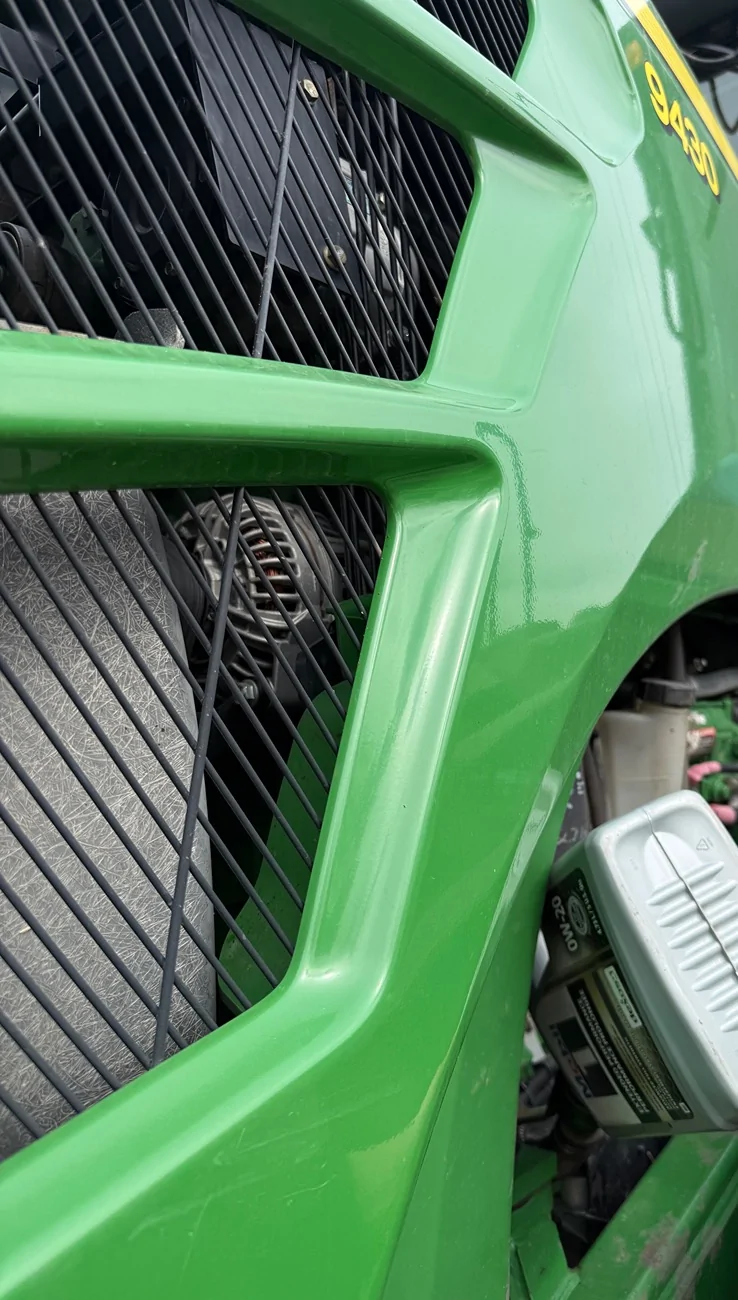
John Deere is inferior to Kubota.Dennis says !
- Joined
- Mar 17, 2025
- Threads
- 3
- Messages
- 174
- Reaction score
- 105
- Location
- California
- Vehicle(s)
- 2024 TRD Off-Road 6MT
@DENNISD Fixed it for you.
That’s actually a pretty reasonable approach, especially how you phased things in after break-in. You’re right about the 0W rating maintaining strong cold-start flow, which is a big deal in modern engines with tight tolerances and turbo components, but only for those living in freezing temperatures. That’s a big part of why OEMs prioritize it, they have to cover all their warranty exposure in a one-size-fits-all recommendation.
On the operating side, your thinking about HTHS is empirical reality. A typical 0W-30 willusually have a higher HTHS than a 0W-20, which has a meaningfully thicker oil film under higher load and temperature. That’s part of why you’ll see heavier grades recommended when the engine isn't subjected to sub-freezing cold starts.
Where it gets more nuanced is that engines like the T24A-FTS are designed and validated around whatever grade oil will allow the engine to last through the warranty period with the lowest cost of overship, not just theidea emperical reality that thicker automatically equals better protection at higher temperatures. OEM testing is primarily based on past engineering knowledge and actually very little in the way of durability cycles, thermal stress, and long-term wear analysis comparable to long-term ownership, and most of the data shows that a spec oil like 0W-20 already maintains proper hydrodynamic separation under normal conditions, with the tradeoff of less shear stability.
So going to 0W-30 isn’t necessarily wrong, it’s just more of a personal margin choice rather than something that’s clearly been shown to reduce wear in a measurable way in this engine, but is instead entirely based on physics and chemistry. The slightly quieter sound you’re noticing is pretty common too when stepping up in viscosity, but that doesn’t necessarily mean it’s reducing wear.
If you’re planning to keep the truck long-term and it gives you peace of mind, I get the underlying physics and reasons for doing so. If you really wanted to validate it, the best way would be to track consistent UOAs over time and look at trends rather than relying on a single result. At the end of the day, it’s a thoughtful setup, just important to separate what feels better from what’s been proven to perform better over time.
Always remember, nearly everyone is operating under "extreme operating" conditions, and that drain interval is 5kmi or 1yr, whichever comes first, and that some OUA show the oil shearing from grade at that interval, further reinforcing the value of timely drain intervals, more stable oil grades, or both.
That’s actually a pretty reasonable approach, especially how you phased things in after break-in. You’re right about the 0W rating maintaining strong cold-start flow, which is a big deal in modern engines with tight tolerances and turbo components, but only for those living in freezing temperatures. That’s a big part of why OEMs prioritize it, they have to cover all their warranty exposure in a one-size-fits-all recommendation.
On the operating side, your thinking about HTHS is empirical reality. A typical 0W-30 will
Where it gets more nuanced is that engines like the T24A-FTS are designed and validated around whatever grade oil will allow the engine to last through the warranty period with the lowest cost of overship, not just the
So going to 0W-30 isn’t necessarily wrong, it’s just more of a personal margin choice rather than something that’s clearly been shown to reduce wear in a measurable way in this engine, but is instead entirely based on physics and chemistry. The slightly quieter sound you’re noticing is pretty common too when stepping up in viscosity, but that doesn’t necessarily mean it’s reducing wear.
If you’re planning to keep the truck long-term and it gives you peace of mind, I get the underlying physics and reasons for doing so. If you really wanted to validate it, the best way would be to track consistent UOAs over time and look at trends rather than relying on a single result. At the end of the day, it’s a thoughtful setup, just important to separate what feels better from what’s been proven to perform better over time.
Always remember, nearly everyone is operating under "extreme operating" conditions, and that drain interval is 5kmi or 1yr, whichever comes first, and that some OUA show the oil shearing from grade at that interval, further reinforcing the value of timely drain intervals, more stable oil grades, or both.
The interesting part is how “physics and chemistry” always get cited as proof, while actual measured durability improvements remain mostly theoretical.@DENNISD Fixed it for you.
That’s actually a pretty reasonable approach, especially how you phased things in after break-in. You’re right about the 0W rating maintaining strong cold-start flow, which is a big deal in modern engines with tight tolerances and turbo components, but only for those living in freezing temperatures. That’s a big part of why OEMs prioritize it, they have to cover all their warranty exposure in a one-size-fits-all recommendation.
On the operating side, your thinking about HTHS is empirical reality. A typical 0W-30 willusuallyhave a higher HTHS than a 0W-20, which has a meaningfully thicker oil film under higher load and temperature. That’s part of why you’ll see heavier grades recommended when the engine isn't subjected to sub-freezing cold starts.
Where it gets more nuanced is that engines like the T24A-FTS are designed and validated around whatever grade oil will allow the engine to last through the warranty period with the lowest cost of overship, not just theideaemperical reality that thickerautomaticallyequals better protection at higher temperatures. OEM testing is primarily based on past engineering knowledge and actually very little in the way of durability cycles, thermal stress, and long-term wear analysis comparable to long-term ownership, and most of the data shows that a spec oil like 0W-20 already maintains proper hydrodynamic separation under normal conditions, with the tradeoff of less shear stability.
So going to 0W-30 isn’t necessarily wrong, it’s just more of a personal margin choice rather than something that’s clearly been shown to reduce wear in a measurable way in this engine, but is instead entirely based on physics and chemistry. The slightly quieter sound you’re noticing is pretty common too when stepping up in viscosity, but that doesn’t necessarily mean it’s reducing wear.
If you’re planning to keep the truck long-term and it gives you peace of mind, I get the underlying physics and reasons for doing so. If you really wanted to validate it, the best way would be to track consistent UOAs over time and look at trends rather than relying on a single result. At the end of the day, it’s a thoughtful setup, just important to separate what feels better from what’s been proven to perform better over time.
Always remember, nearly everyone is operating under "extreme operating" conditions, and that drain interval is 5kmi or 1yr, whichever comes first, and that some OUA show the oil shearing from grade at that interval, further reinforcing the value of timely drain intervals, more stable oil grades, or both.
Nobody disputes that a thicker oil can provide a thicker film under certain conditions.
The debate is whether that translates into meaningful real-world durability gains in this engine beyond what Toyota already validated.
That’s the part still missing.
Sponsored
Similar threads

- Replies
- 41
- Views
- 24,257

- Replies
- 35
- Views
- 8,123

- Replies
- 45
- Views
- 12,995


- Replies
- 19
- Views
- 12,691
