- First Name
- Cameron
- Joined
- Apr 2, 2025
- Threads
- 17
- Messages
- 257
- Reaction score
- 336
- Location
- New Mexico
- Vehicle(s)
- 2025 Tacoma TRD OffRoad
- Thread starter
- #1
2024 Tacoma Intake Comparison Testing – Stock Calibration vs Real-World Results
After much online discussion about intake performance on the new 2.4T Tacoma platform, I wanted to perform a controlled comparison between several popular intake systems using the same truck, same dyno, same fuel, and same testing procedure.
The goal was not to prove that one intake “wins,” but rather to document how these systems behave on the factory calibration and how the ECU responds to them under controlled conditions.
This testing was intended to provide comparative real-world data using a consistent and repeatable process. While no chassis dyno comparison can perfectly eliminate every variable, significant effort was made to keep testing conditions as consistent as possible between intake systems, including vehicle configuration, fuel, dyno setup, operating temperature, adaptation process, and test procedure.
The results shown here should be viewed as comparative findings from this specific vehicle and test environment, not as absolute universal performance numbers for every truck or condition.
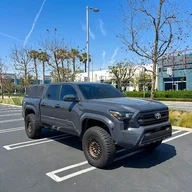
Test Vehicle

Wheel & Tire Setup

It is important to note that this truck is running a significantly heavier-than-stock wheel and tire package. This absolutely affects measured wheel horsepower and acceleration rate on a chassis dyno compared to stock-equipped trucks.
The objective of this testing was comparative consistency between intake systems — not chasing the highest absolute dyno number.
Intakes Tested

Test Procedure
Each intake was installed individually and tested using the same vehicle under the same conditions.
The following process was repeated for every intake:
Dyno Results – Stock Calibration
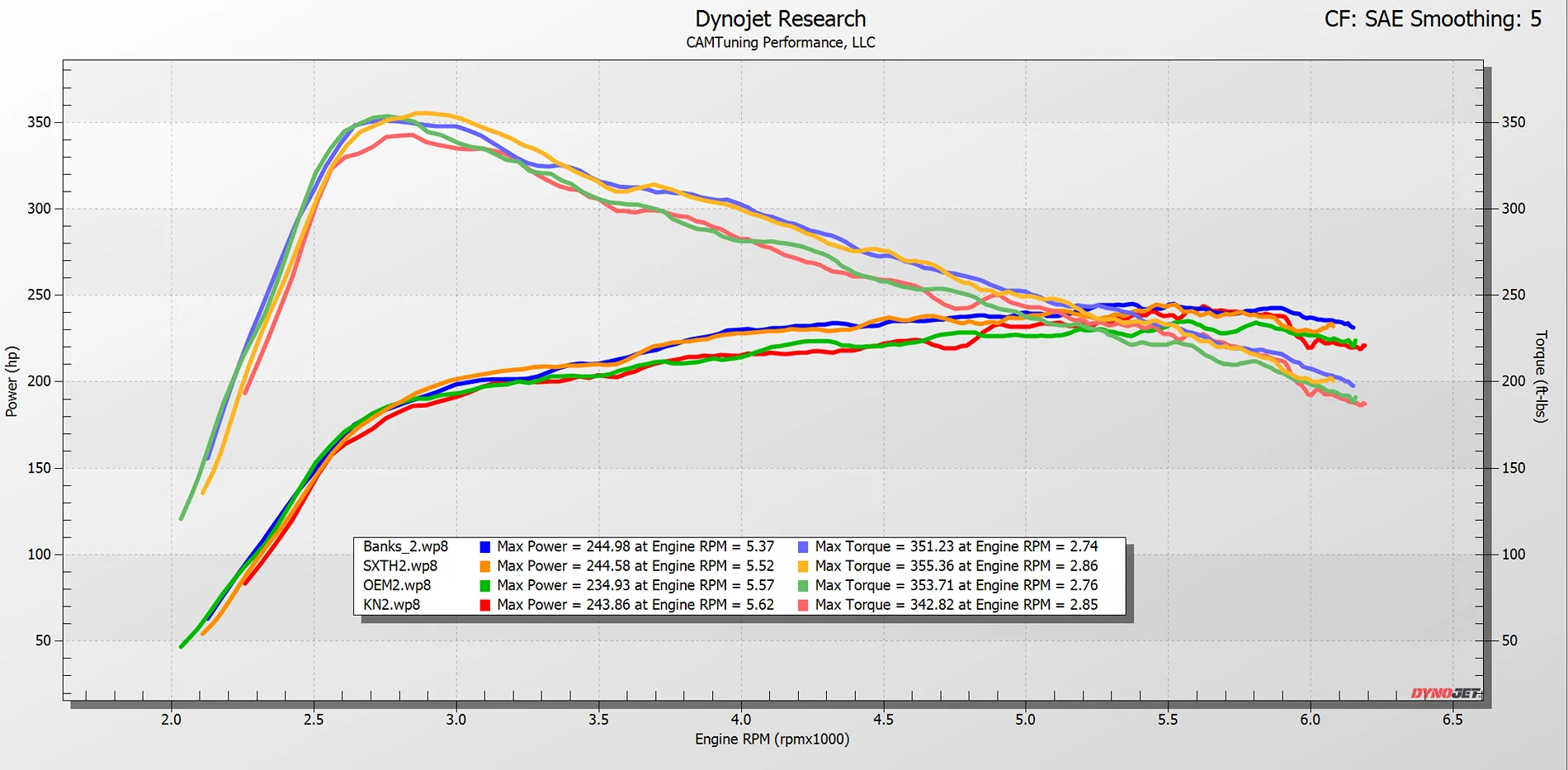
Despite significant differences in intake design, the dyno results were remarkably close.
Peak horsepower results:
The biggest takeaway from the dyno portion of this testing is that on the factory calibration and stock turbocharger, the ECU’s torque and airflow management strategy minimizes outright power differences between quality intake systems more than many enthusiasts expect.

Fuel Trim Observations
While horsepower differences remained relatively small, fuel correction behavior varied much more noticeably between intake systems.
Approximate overall fuel trim behavior observed during testing:
This does NOT necessarily mean one intake is “bad” and another is “good.” What it does show is that different intake geometries and MAF housing designs deviate from the factory airflow model by different amounts when operated on the stock calibration.
The factory ECU adapted quickly to all tested systems, but some required substantially more correction than others to maintain commanded fueling. None of them had any CEL during testing.
Final Thoughts
The most important aspect of this testing was consistency.
Every intake was tested:
Under those controlled conditions, all tested intake systems performed relatively similarly on the factory calibration and stock turbocharger.
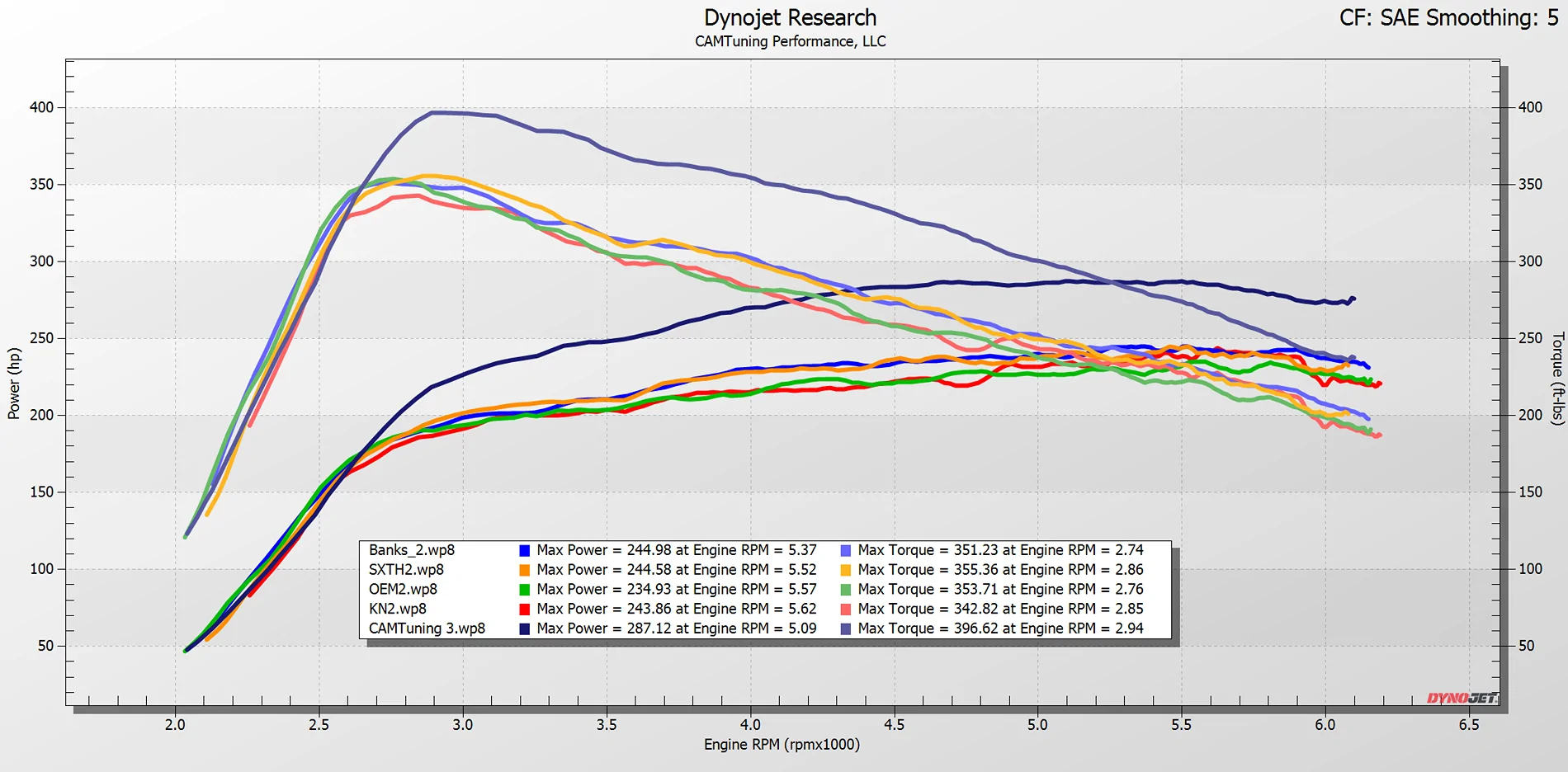
After completing the stock calibration testing, the K&N intake was professionally calibrated on 91 octane for the owner of this truck. Once the truck received a complete calibration — including airflow modeling, torque request strategy, fueling, ignition timing, boost control, and transmission tuning — the intake responded significantly better than it did on the factory calibration while maintaining stable fuel correction behavior.

That is the biggest conclusion from this testing:
These intake systems are all relatively comparable on the stock tune, but they have substantially more potential once paired with proper professional calibration.
The factory ECU is capable of adapting surprisingly well on its own, but custom tuning allows the airflow model, fuel correction behavior, and overall performance to be optimized correctly rather than simply compensated for.
After much online discussion about intake performance on the new 2.4T Tacoma platform, I wanted to perform a controlled comparison between several popular intake systems using the same truck, same dyno, same fuel, and same testing procedure.
The goal was not to prove that one intake “wins,” but rather to document how these systems behave on the factory calibration and how the ECU responds to them under controlled conditions.
This testing was intended to provide comparative real-world data using a consistent and repeatable process. While no chassis dyno comparison can perfectly eliminate every variable, significant effort was made to keep testing conditions as consistent as possible between intake systems, including vehicle configuration, fuel, dyno setup, operating temperature, adaptation process, and test procedure.
The results shown here should be viewed as comparative findings from this specific vehicle and test environment, not as absolute universal performance numbers for every truck or condition.
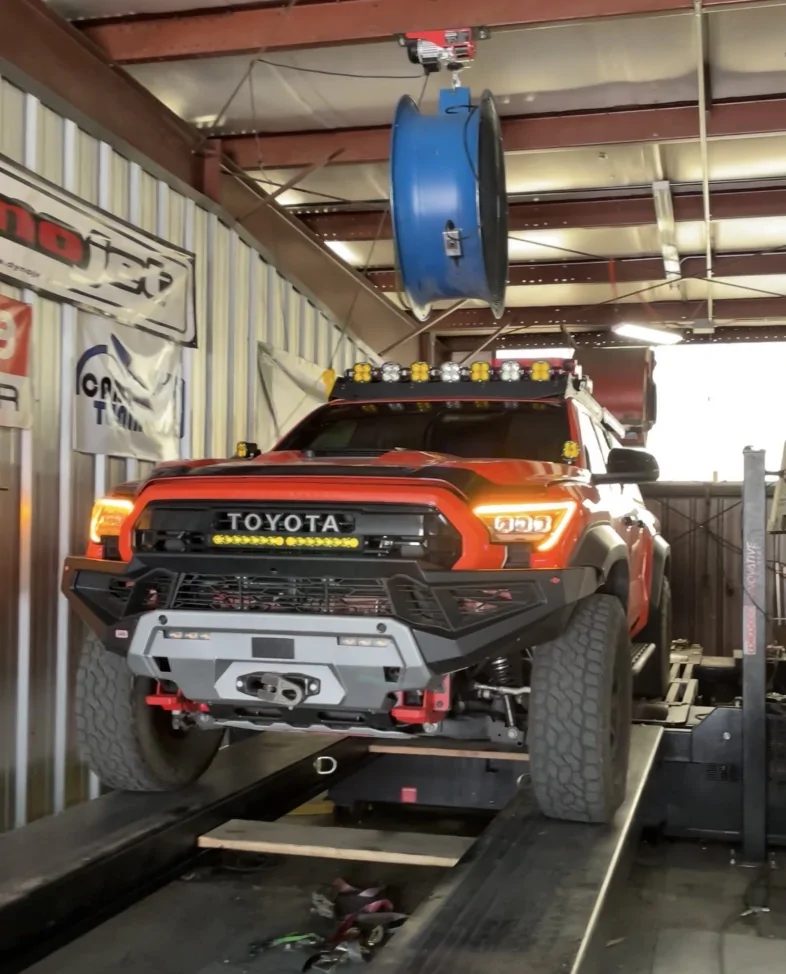
Test Vehicle
- 2024 Toyota Tacoma (Non-Hybrid)
- 8-Speed Automatic Transmission
- Approximately 12,000 miles
- 91 octane fuel
- Dyno testing performed in 4th gear
- AFE charge pipes installed throughout all testing
Wheel & Tire Setup
- ICON alloy wheels
- Toyo Open Country A/T tires
- 35x11.50R17LT
- Load Range C
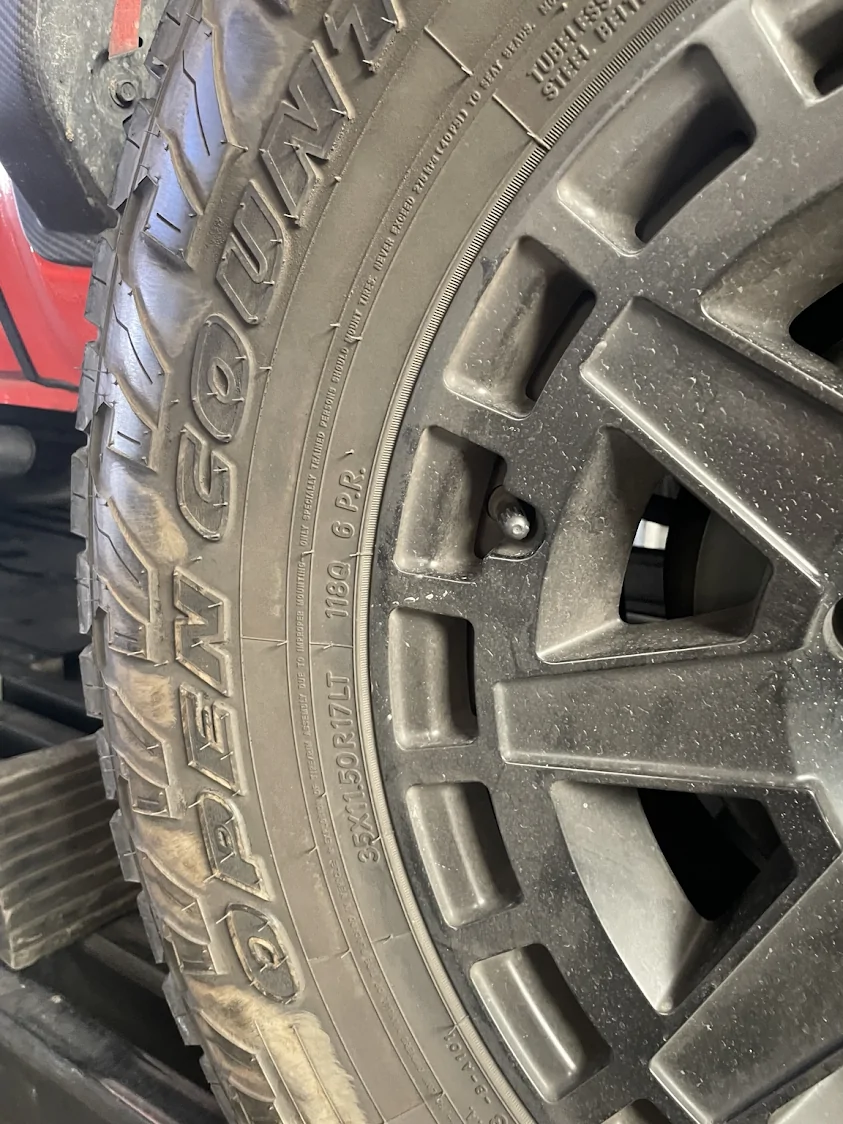
It is important to note that this truck is running a significantly heavier-than-stock wheel and tire package. This absolutely affects measured wheel horsepower and acceleration rate on a chassis dyno compared to stock-equipped trucks.
The objective of this testing was comparative consistency between intake systems — not chasing the highest absolute dyno number.
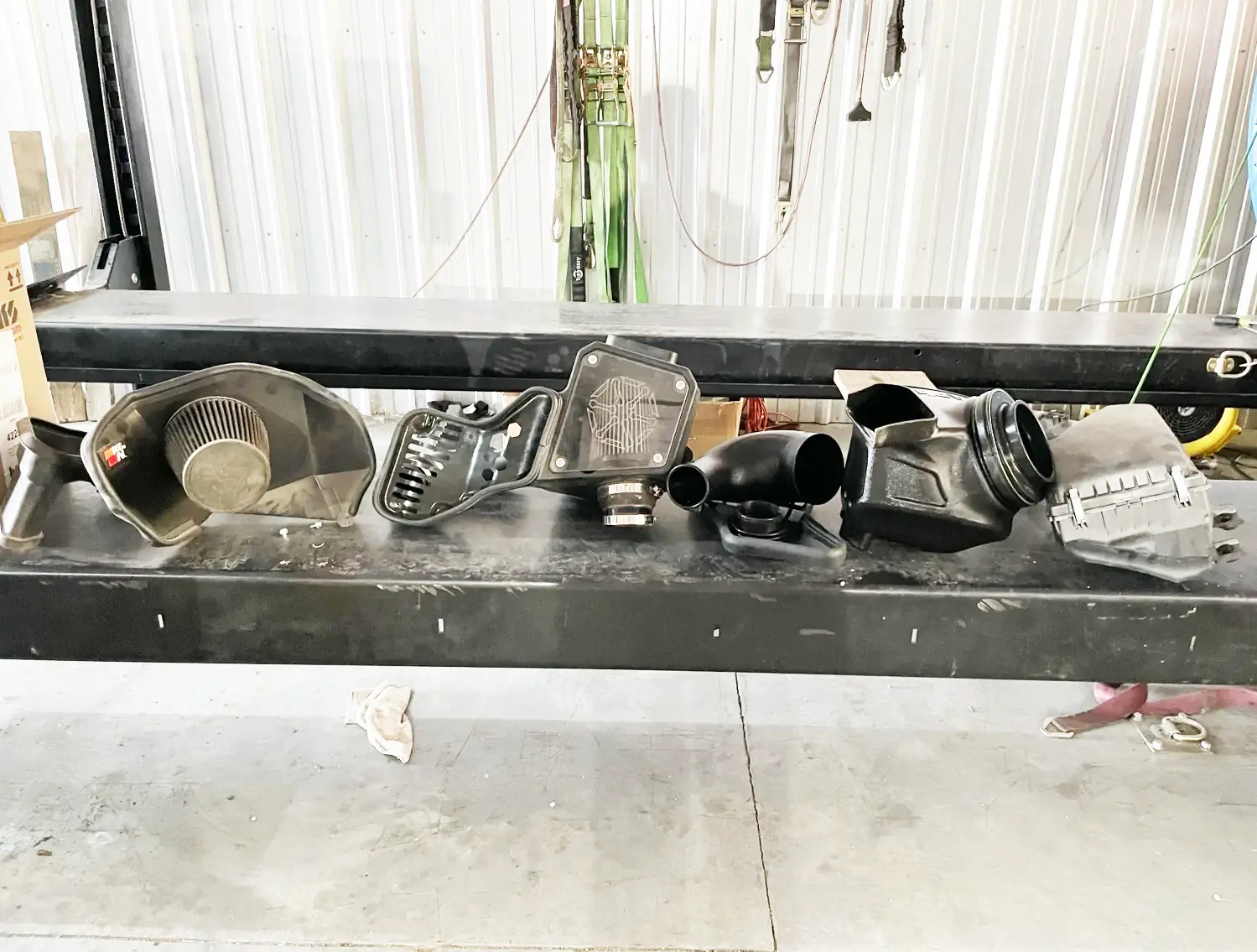
Intakes Tested
- Factory airbox
- Banks intake
- SXTH intake
- K&N intake (older version that does not replace the turbo inlet)
Test Procedure
Each intake was installed individually and tested using the same vehicle under the same conditions.
The following process was repeated for every intake:
- ECU learning reset performed
- Vehicle driven to begin repopulating learned airflow and fuel trim behavior
- Three dyno pulls performed
- Pull 0 was discarded because it was consistently lower immediately after the reset process began
- Pull 2 was used as the stabilized comparison run
Dyno Results – Stock Calibration
Despite significant differences in intake design, the dyno results were remarkably close.
Peak horsepower results:
- Banks: 244.98 whp
- SXTH: 244.58 whp
- OEM Airbox: 234.93 whp
- K&N: 243.86 whp
The biggest takeaway from the dyno portion of this testing is that on the factory calibration and stock turbocharger, the ECU’s torque and airflow management strategy minimizes outright power differences between quality intake systems more than many enthusiasts expect.
Fuel Trim Observations
While horsepower differences remained relatively small, fuel correction behavior varied much more noticeably between intake systems.
Approximate overall fuel trim behavior observed during testing:
- OEM airbox: approximately ±5%
- K&N: approximately ±5%
- SXTH: approximately 10–12%
- Banks: approximately 13–14%
This does NOT necessarily mean one intake is “bad” and another is “good.” What it does show is that different intake geometries and MAF housing designs deviate from the factory airflow model by different amounts when operated on the stock calibration.
The factory ECU adapted quickly to all tested systems, but some required substantially more correction than others to maintain commanded fueling. None of them had any CEL during testing.
Final Thoughts
The most important aspect of this testing was consistency.
Every intake was tested:
- on the same vehicle
- on the same dyno
- on the same fuel
- on the same day
- using the same testing procedure
Under those controlled conditions, all tested intake systems performed relatively similarly on the factory calibration and stock turbocharger.
After completing the stock calibration testing, the K&N intake was professionally calibrated on 91 octane for the owner of this truck. Once the truck received a complete calibration — including airflow modeling, torque request strategy, fueling, ignition timing, boost control, and transmission tuning — the intake responded significantly better than it did on the factory calibration while maintaining stable fuel correction behavior.
That is the biggest conclusion from this testing:
These intake systems are all relatively comparable on the stock tune, but they have substantially more potential once paired with proper professional calibration.
The factory ECU is capable of adapting surprisingly well on its own, but custom tuning allows the airflow model, fuel correction behavior, and overall performance to be optimized correctly rather than simply compensated for.
Sponsored