
Sponsored

5w-30

shackley

Trailhunter
Well-known member
First Name
Steve
Joined
Jan 6, 2026
Threads
3
Messages
138
Reaction score
71
Location
Bernalillo County/Middle Rio Grande, New Mexico
Website
www.swxrflab.net
Vehicle(s)
2026 Tacoma TH (Ice Cap); 2023 RAV4 Prime
This is exactly what my maintenance schedule looks like. 30w in the summer can't hurt anything, especially if the truck is being worked hard. 0w20 won't hurt anything either (assuming no fuel dilution), but there is a lower safety margin before it shears or dilutes out of spec. Being a turbo GDI engine with low tension piston rings, an oil that fights fuel dilution better seems like a no brainer. Kind of have to read between the lines in the owner's manual for some of this stuff...
I agree. Here in New Mexico even in the winter, the oil level rises, maybe 1/16-1/8 of a quart with 0w20, and I use 5w30 in the summer, and there is no change in oil level. Whether that's fuel contamination or some other variable, it's still my observation. I've only used 5w30 once, to the jury is still out, but I'll report back in a year or so.
Sponsored


shackley

Trailhunter
Well-known member
First Name
Steve
Joined
Jan 6, 2026
Threads
3
Messages
138
Reaction score
71
Location
Bernalillo County/Middle Rio Grande, New Mexico
Website
www.swxrflab.net
Vehicle(s)
2026 Tacoma TH (Ice Cap); 2023 RAV4 Prime
Honestly, this is one of the more rational takes in the thread.

You're acknowledging that it's a personal choice based on climate, operating conditions, and your own comfort level rather than claiming Toyota got it wrong.

I don't have any issue with that position.

Where I've pushed back is when people take the next step and claim that 5W-30 is demonstrably superior for durability in this engine without actually having the data to support it.

"Personal preference within Toyota's approved viscosity range" is a much easier argument to defend than "Toyota's North American recommendation is wrong." (y)
Thanks. I used the same philosophy in my 2022 Jeep Gladiator that called for 0w20 as well, and didn't see any problems, but only had it for four years. I loved the Jeep, but waaay too many issues. Still it had better "off-road ability" than the TH, but not by much. I've taken the TH on the same trails (using the same Nokian Outpost tires). Sorry for getting off the track, so to speak.
 

shackley

Trailhunter
Well-known member
First Name
Steve
Joined
Jan 6, 2026
Threads
3
Messages
138
Reaction score
71
Location
Bernalillo County/Middle Rio Grande, New Mexico
Website
www.swxrflab.net
Vehicle(s)
2026 Tacoma TH (Ice Cap); 2023 RAV4 Prime
As you wrote, this undermines Dennis’s argument.. and again, my contention that Toyota only recommends 0w20 for CAFE rating. To the credit of Dennis, he want more than my anecdotal evidence, and he is correct. When oil samples are tested for this engine, making a comparison, then we will have an empirical answer. With heat management being a concern in hotter environments, it seems likely that Toyota offers oil viscosity as high as 10w30 for hot climates. Since the United States has the same high temps, like in Arizona as compared to Mexico, it begs the question as to why Toyota would only recommend 0w20 in the United States for this engine- to me. It is a logical argument but can only be verified by a Toyota power plant engineer familiar with the decision for only 0w20 for the United States, vs Mexico/spain/russia, etc…. Or an oil comparison test, on this engine.
The CAFE standards aside, maybe it's just easier for Toyota to stick to 0w20. Our RAV 4 Prime calls for the same oil. As I mentioned elsewhere, my 2022 Jeep Gladiator called for 0w20 in the V-6.
 

IDontWorkForTheWaterCo

SR
Active member
Joined
Jul 11, 2026
Threads
2
Messages
32
Reaction score
37
Location
USA
Vehicle(s)
2026 Tacoma SR
New around here. But I figured it wouldn't be long before I ran into an oil thread :crazy:

I'll say this. In every Toyota owner's manual I have ever seen, I've only seen "recommend oil viscosities". I have never seen a "required oil viscosity". I have also never seen a single warning in the manual about check engine lights, internal damage or warranties being voided by using something other than the recommend viscosity. Yes, there is some fuzzy CAFE talk of returning to the recommend viscosity if a non recommend viscosity is used. But nothing else. If it were that big of a problem it would surely be highlighted in the manual?

And if 5w30 is "too thick", you better not start your engine on a cold, frosty morning with 0w20 in it.
 

DENNISD

TRD Sport Premium
Well-known member
First Name
Dennis
Joined
May 11, 2025
Threads
2
Messages
210
Reaction score
232
Location
Omaha
Vehicle(s)
2024 Sport Solar Octane I-Force Max Premium
New around here. But I figured it wouldn't be long before I ran into an oil thread :crazy:

I'll say this. In every Toyota owner's manual I have ever seen, I've only seen "recommend oil viscosities". I have never seen a "required oil viscosity". I have also never seen a single warning in the manual about check engine lights, internal damage or warranties being voided by using something other than the recommend viscosity. Yes, there is some fuzzy CAFE talk of returning to the recommend viscosity if a non recommend viscosity is used. But nothing else. If it were that big of a problem it would surely be highlighted in the manual?

And if 5w30 is "too thick", you better not start your engine on a cold, frosty morning with 0w20 in it.
I agree that Toyota doesn't present 5W-30 as some catastrophic choice that will immediately damage the engine or void the warranty. The manuals clearly show the engine is capable of operating on a range of viscosities depending on the market.

Where I'd make one clarification is your last point.

A cold 0W-20 isn't equivalent to a hot 5W-30. The "0W" rating describes cold-start performance, while the "20" and "30" describe viscosity at operating temperature. Those are two different characteristics.

To me, the takeaway from all of this is that Toyota clearly considers multiple adjacent viscosities acceptable. What still hasn't been demonstrated is that moving from the North American recommendation to 5W-30 produces measurably better long-term durability in this engine.

That's really the only point I've been trying to make.
 

Sponsored

BLtheP

SR
Well-known member
Joined
Apr 12, 2024
Threads
4
Messages
246
Reaction score
180
Location
TX
Vehicle(s)
2026 Tacoma SR MT & 2021 Tacoma TRD OR MT
A cold 0W-20 isn't equivalent to a hot 5W-30. The "0W" rating describes cold-start performance, while the "20" and "30" describe viscosity at operating temperature. Those are two different characteristics.
He didn’t say they’re equivalent.
 

DENNISD

TRD Sport Premium
Well-known member
First Name
Dennis
Joined
May 11, 2025
Threads
2
Messages
210
Reaction score
232
Location
Omaha
Vehicle(s)
2024 Sport Solar Octane I-Force Max Premium
He didn’t say they’re equivalent.
That's a fair point, and I don't think anyone is arguing that 5W-30 is "too thick" for this engine. Toyota itself approves it in other markets.

The question isn't whether the engine can run 5W-30—it clearly can.

The question is whether switching from the North American recommendation to 5W-30 provides a measurable durability benefit in this engine.

Those are two different discussions.
 

BLtheP

SR
Well-known member
Joined
Apr 12, 2024
Threads
4
Messages
246
Reaction score
180
Location
TX
Vehicle(s)
2026 Tacoma SR MT & 2021 Tacoma TRD OR MT
That's a fair point, and I don't think anyone is arguing that 5W-30 is "too thick" for this engine. Toyota itself approves it in other markets.

The question isn't whether the engine can run 5W-30—it clearly can.

The question is whether switching from the North American recommendation to 5W-30 provides a measurable durability benefit in this engine.

Those are two different discussions.
Thank you
 
OP
OP
GSPHerder

GSPHerder

TRD Pro
Well-known member
First Name
Rudy
Joined
Feb 13, 2026
Threads
9
Messages
164
Reaction score
127
Location
New Mexico
Vehicle(s)
2026 Tacoma TRD PRO
The question is whether switching from the North American recommendation to 5W-30 provides a measurable durability benefit in this engine.

Those are two different discussions.
There's only ONE discussion, what does the oil analysis say?? Not what your personal feeling say, but what are the numbers?

incase you missed it - Funny that this guy is preaching 0w-20 but his analysis showed abnormal wear at 20k miles
 

DENNISD

TRD Sport Premium
Well-known member
First Name
Dennis
Joined
May 11, 2025
Threads
2
Messages
210
Reaction score
232
Location
Omaha
Vehicle(s)
2024 Sport Solar Octane I-Force Max Premium
There's only ONE discussion, what does the oil analysis say?? Not what your personal feeling say, but what are the numbers?

incase you missed it - Funny that this guy is preaching 0w-20 but his analysis showed abnormal wear at 20k miles
I'm all for looking at the numbers. That's exactly why I don't think one UOA can answer the question.

If one 0W-20 analysis shows elevated wear, there are dozens of possible explanations besides viscosity—engine break-in, driving conditions, contamination, fuel dilution, sampling variation, OCI length, manufacturing tolerances, and more.

Likewise, if one 5W-30 UOA looks great, that doesn't prove 5W-30 is the reason.

UOAs are excellent for tracking trends in an individual engine over time. They're much less effective at proving one viscosity is superior based on isolated examples.

If the goal is to gather a large number of UOAs and look for consistent patterns, I'm all for that. But let's be careful not to draw conclusions from a single report that we'd reject if it supported the opposite conclusion.
 

Sponsored

IDontWorkForTheWaterCo

SR
Active member
Joined
Jul 11, 2026
Threads
2
Messages
32
Reaction score
37
Location
USA
Vehicle(s)
2026 Tacoma SR
I agree that Toyota doesn't present 5W-30 as some catastrophic choice that will immediately damage the engine or void the warranty. The manuals clearly show the engine is capable of operating on a range of viscosities depending on the market.

Where I'd make one clarification is your last point.

A cold 0W-20 isn't equivalent to a hot 5W-30. The "0W" rating describes cold-start performance, while the "20" and "30" describe viscosity at operating temperature. Those are two different characteristics.

To me, the takeaway from all of this is that Toyota clearly considers multiple adjacent viscosities acceptable. What still hasn't been demonstrated is that moving from the North American recommendation to 5W-30 produces measurably better long-term durability in this engine.

That's really the only point I've been trying to make.
No I wasn't saying they were equivalent. Just pointing out that 0w20 can be considerably more viscous than 5w30 depending on engine temperature. As you probably know, viscosity isn't a single point on a line. It varies greatly depending on ambient air temp and engine temperature. The KV100 score of 0w20 and 5w30 are not in different universes. There are heavy 20s and light 30s that can almost have the same viscosity at the end and beginning of their ranges. And the cold flow characteristics between 0w and 5w are pretty negligible until you get to extreme temperatures....say -20° F and lower.

There just isn't enough viscosity difference between 0w20 and 5w30 to really matter. However, 5w30 does have the potential to provide slightly better film strength and can handle fuel dilution a little better than 0w20.

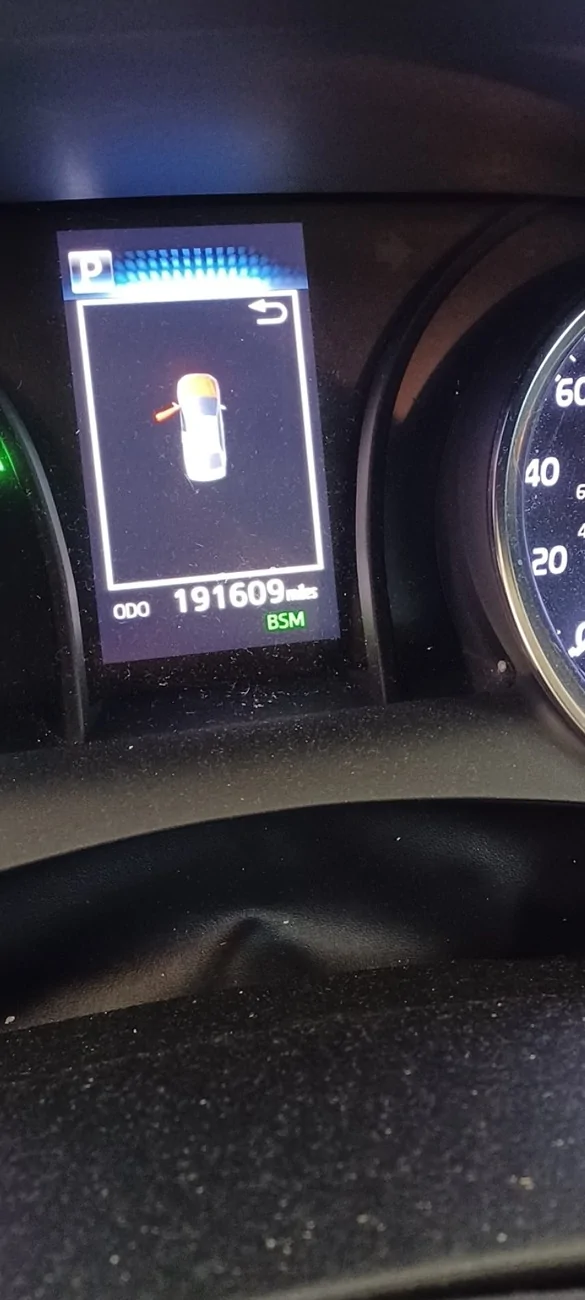
Now I have no UOAs to prove anything. But here's what I can say. I service a friend's '20 Camry with the A25 engine (our T24 is a close cousin). That vehicle currently sits at about 210k miles. Other than the first 20k under Toyota Care, I've done every oil change that it's ever had. Sometimes she provides the oil and filter, sometimes she asks me to. It's spent nearly all of it life on 0w20, 5w20 (synthetic) or 5w30 (synthetic)....mostly 5w30 last couple of years and always a cheaper house brand like STP, SuperTech, Meijer, etc. It runs flawlessly and consumes no oil. I'm not saying it wouldn't have gone this far on 0w16 (it's recommendation). It may very well have. But what I do know is that's it's made 190k miles of it's 210k miles running an oil outside what Toyota recommends with zero issues.

This was 2 oil changes ago. So add another 20k to this total.

2024 Tacoma 5w-30 Screenshot_20260404_162257_Gallery


I also have a 2ZR (0w20) engine in the family that has run 5w30 for 74k of its 75k miles. Zero issues.

My 2 M30 Dynamic Force engines both run a grade higher than the recommendation. Again, zero issues.
 

DENNISD

TRD Sport Premium
Well-known member
First Name
Dennis
Joined
May 11, 2025
Threads
2
Messages
210
Reaction score
232
Location
Omaha
Vehicle(s)
2024 Sport Solar Octane I-Force Max Premium
No I wasn't saying they were equivalent. Just pointing out that 0w20 can be considerably more viscous than 5w30 depending on engine temperature. As you probably know, viscosity isn't a single point on a line. It varies greatly depending on ambient air temp and engine temperature. The KV100 score of 0w20 and 5w30 are not in different universes. There are heavy 20s and light 30s that can almost have the same viscosity at the end and beginning of their ranges. And the cold flow characteristics between 0w and 5w are pretty negligible until you get to extreme temperatures....say -20° F and lower.

There just isn't enough viscosity difference between 0w20 and 5w30 to really matter. However, 5w30 does have the potential to provide slightly better film strength and can handle fuel dilution a little better than 0w20.

Now I have no UOAs to prove anything. But here's what I can say. I service a friend's '20 Camry with the A25 engine (our T24 is a close cousin). That vehicle currently sits at about 210k miles. Other than the first 20k under Toyota Care, I've done every oil change that it's ever had. Sometimes she provides the oil and filter, sometimes she asks me to. It's spent nearly all of it life on 0w20, 5w20 (synthetic) or 5w30 (synthetic)....mostly 5w30 last couple of years and always a cheaper house brand like STP, SuperTech, Meijer, etc. It runs flawlessly and consumes no oil. I'm not saying it wouldn't have gone this far on 0w16 (it's recommendation). It may very well have. But what I do know is that's it's made 190k miles of it's 210k miles running an oil outside what Toyota recommends with zero issues.

This was 2 oil changes ago. So add another 20k to this total.

Screenshot_20260404_162257_Gallery.webp


I also have a 2ZR (0w20) engine in the family that has run 5w30 for 74k of its 75k miles. Zero issues.

My 2 M30 Dynamic Force engines both run a grade higher than the recommendation. Again, zero issues.
Your examples actually reinforce something I think we agree on: these engines appear to be quite tolerant of adjacent viscosities. A Camry making it to over 200,000 miles on a mix of 0W-20, 5W-20, and 5W-30 is impressive, but to me it demonstrates the robustness of the engine more than the superiority of any one oil.

Where I still hesitate is drawing a broader conclusion from individual success stories. I could just as easily point to engines with very high mileage on the factory-recommended oil, and neither example would prove one viscosity is better than the other.

That's why I've kept coming back to the same point: the existence of successful anecdotes shows multiple viscosities can work. It doesn't establish that one provides measurably better long-term durability in this engine.

I think we've actually narrowed the disagreement considerably. We both seem to agree the engine can operate successfully on adjacent viscosities. We just differ on whether there's enough evidence today to say one is objectively better than the other.
 

IDontWorkForTheWaterCo

SR
Active member
Joined
Jul 11, 2026
Threads
2
Messages
32
Reaction score
37
Location
USA
Vehicle(s)
2026 Tacoma SR
Your examples actually reinforce something I think we agree on: these engines appear to be quite tolerant of adjacent viscosities. A Camry making it to over 200,000 miles on a mix of 0W-20, 5W-20, and 5W-30 is impressive, but to me it demonstrates the robustness of the engine more than the superiority of any one oil.

Where I still hesitate is drawing a broader conclusion from individual success stories. I could just as easily point to engines with very high mileage on the factory-recommended oil, and neither example would prove one viscosity is better than the other.

That's why I've kept coming back to the same point: the existence of successful anecdotes shows multiple viscosities can work. It doesn't establish that one provides measurably better long-term durability in this engine.

I think we've actually narrowed the disagreement considerably. We both seem to agree the engine can operate successfully on adjacent viscosities. We just differ on whether there's enough evidence today to say one is objectively better than the other.
Oh I agree on the good engine design. They are not viscosity sensitive....not in the least. And as far as oil? That Camry hasn't ever had boutique oil or even what we would consider name brand oil. Mostly Warren and Aamalie produced private lable house brands. In other words, what's ever cheapest. That actually opens up another discussion on whether there is really a big difference in oil brands over the course of vehicle's life. Based on vehicles that I have come in contact with over the years, there isn't.
 

32spoke

TRD Off-Road Premium
Well-known member
First Name
Jason
Joined
Aug 7, 2024
Threads
0
Messages
302
Reaction score
183
Location
Petaluma,CA
Vehicle(s)
2024 Tacoma TRD OR
I'm all for looking at the numbers. That's exactly why I don't think one UOA can answer the question.

If one 0W-20 analysis shows elevated wear, there are dozens of possible explanations besides viscosity—engine break-in, driving conditions, contamination, fuel dilution, sampling variation, OCI length, manufacturing tolerances, and more.

Likewise, if one 5W-30 UOA looks great, that doesn't prove 5W-30 is the reason.

UOAs are excellent for tracking trends in an individual engine over time. They're much less effective at proving one viscosity is superior based on isolated examples.

If the goal is to gather a large number of UOAs and look for consistent patterns, I'm all for that. But let's be careful not to draw conclusions from a single report that we'd reject if it supported the opposite conclusion.
Yes, and if an engine is poorly designed or has a poorly designed oil system, it can show signs of accelerated wear, regardless of viscosity. On a separate note, what turbocharger manufacturer is a fan of 0w20??
 

Andrace

TRD Off-Road Premium
Well-known member
Joined
Mar 17, 2025
Threads
3
Messages
174
Reaction score
105
Location
California
Vehicle(s)
2024 TRD Off-Road 6MT
There are MANY variables in play when it comes to engine wear and longevity: the nature of the miles driven/miles per cold start, load placed on the engine before reaching operating temperature, load placed on the engine generally (towing/climbing grades), average engine speed, total vehicle wheight, drain interval relationship between miles and time, engine oil chemistry between brands, AND oil viscosity. I wouldn't be using 5-30 if I lived in North Dakota, and I wouldn't run 0-20 if I lived in Arizona.

The point is, there are more variables in play than a one-size-fits-all recommendation can cover in totality. Keep in mind, not many average Tacoma owners meet the 0-20 10k "ideal" schedule to begin with, and UOA shows that 5K intervals for average owners are on the long end.

The other question for wear and protection is the time frame. Are we even exchanging on the same goal? Most owners don't reach 200k miles on their vehicles.
https://autorecyclingworld.com/how-long-do-cars-really-last-in-the-usa-a-2024-deep-dive/

If cars with 0w baseweight oils, going 10k between drains with turbos and low tension rings are well proven to go 200k, I'd like to see the evidence for that. By my standard, I see the opposite, lots of folks going off the recommendations, burning a quart every thousand miles, and scrapping the car 50k miles before they "should" be.
Sponsored


Top