
Sponsored

MT-Taco

TRD Off-Road Premium
Well-known member
First Name
Allen
Joined
May 22, 2023
Threads
21
Messages
1,096
Reaction score
1,036
Location
Montana
Vehicle(s)
2024 TRD off-road Tacoma
Well dang! The gap between the SXTH and the Banks is way closer than I figured it would be. Interesting that the SXTH actually has better fuel trims too.

I 100% fell for the Banks marketing koolaid and sold my SXTH to get the Banks. Now I wish I would have just kept the SXTH because it sounded soooo much better. Definitely worth the 0.4 horsepower less versus the Banks lol.
Is the Banks quieter or just sounds different?
Sponsored


LincolnSixAlpha

TRD Off-Road
Well-known member
First Name
Brian
Joined
Jun 15, 2024
Threads
6
Messages
194
Reaction score
220
Location
Phoenix
Vehicle(s)
2024 Tacoma TRD Off-Road
Aren’t you supposed to drive hard here and their to burn off all the carbon build up though?

Called the "Italian" tune-up. Worth doing every now and again. I've seen engines die from too much carbon. Meaning the owner (likely aged) never really dipped into the pedal at all and only drove the vehicle lightly.
 

bitflogger

TRD Off-Road
Well-known member
Joined
Jul 21, 2024
Threads
7
Messages
355
Reaction score
316
Location
WI
Vehicle(s)
2024 Tacoma TRD Offroad Long Bed
My thoughts are....

-I don't drive set in 4th gear with 91 octane except for rare moments.
-I'm not seeing how these address air filters catching particles important for my varied use.
-That is a lot of money, effort and time for the gains.

This stuff seems way more for hobbyists or small niches than someone like me who has a pickup mostly as a tool, and finds it good as is. I also think of an associate who works in auto industry and specializes in exhaust and intake. He's highlighted the broad range of situations where they test. They aim for best overall in lots of circumstances which would be my use.
 

Will721

TRD Off-Road
Well-known member
First Name
Will
Joined
Nov 19, 2025
Threads
2
Messages
330
Reaction score
306
Location
Quad Cities
Vehicle(s)
2025 TRD OR
Just based off the charts it looks to me like buying an intake for the average driver is pointless. Most of us wouldn’t be spending our day to day driving at 3500 plus rpm.

I was heavily considering a Banks intake but looking at the dyno charts makes me feel my money would be better spent elsewhere.

Thank you for putting in the hard work for this.

Depends on your drive. I hit 3500rpm every day unfortunately. In my area, interstate speed limits are 70mph. Actual flow of traffic is between 75-80mph. Which is not abnormal by any means, but we have alot of very short on ramps and few courteous drivers. Especially the OTR boys. Use it or loose it. One particular ramp of my daily commute I keep my hand on the mode knob to kick it into sport if I see dense traffic coming up.
 

Sponsored

Will721

TRD Off-Road
Well-known member
First Name
Will
Joined
Nov 19, 2025
Threads
2
Messages
330
Reaction score
306
Location
Quad Cities
Vehicle(s)
2025 TRD OR
My thoughts are....

-I don't drive set in 4th gear with 91 octane except for rare moments.
-I'm not seeing how these address air filters catching particles important for my varied use.
-That is a lot of money, effort and time for the gains.

This stuff seems way more for hobbyists or small niches than someone like me who has a pickup mostly as a tool, and finds it good as is. I also think of an associate who works in auto industry and specializes in exhaust and intake. He's highlighted the broad range of situations where they test. They aim for best overall in lots of circumstances which would be my use.
Its important to note the octane and gear selection are not to demonstrate daily usage differences but to apply standardization to evenly measure peak power with minimal variation and environmental influences. The dyno likes 4th gear, and high octane fuel maximizes power. This is done to compare all aftermarket components. Its also important to remember that intakes alone are just a piece of a puzzle to gain power. 10-15 hp may not seem like much, but paired with an exhaust, tune, high flow cats, and other components it all adds up to a larger increase. A 20% or more increase is nothing to shake a stick at. Its not unlikely we will see non hybrid trucks creeping close to 500hp soon.

Oems do not build any component with any single target in mind, but rather compromise to get a desired result. They could build an intake to maximize air filtration and engine life but that would diminish power. They likewise could make one to maximize power but that would be loud and shorten engine life. A shorter high flow intake is good for throttle response, but may draw hot air. Cost of course is one of the largest factors as a $10 increase on 1,000,000 units is substantial. Ect. Ect.

Aftermarket intakes on forced induction vehicles can be changed to achieve much more substantial results because they have the most compromises and aren't limited to the engines ability to pump air by itself. Larger cone filters spec'd properly will clean just as well as flat panels but will be considerably louder and more expensive. The trade off is more surface area and therefore flow. Widening tubes, smoothing angles, and in some cases removing silencers will also benefit power but add to the sound. The oem prioritizes quiet, and cheap at the cost of hp. The aftermarket does thr opposite. But both can do so at the same level of filtration, just check micron ratings.
 
OP
OP
CAMTuning

CAMTuning

TRD Off-Road
Well-known member
BASIC Sponsor
First Name
Cameron
Joined
Apr 2, 2025
Threads
21
Messages
280
Reaction score
399
Location
New Mexico
Vehicle(s)
2025 Tacoma TRD OffRoad

rfra96

TRD Off-Road
New member
First Name
reed
Joined
May 15, 2026
Threads
0
Messages
1
Reaction score
0
Location
MN
Vehicle(s)
2026 tacoma trd offroad
2024 Tacoma Intake Comparison Testing – Stock Calibration vs Real-World Results

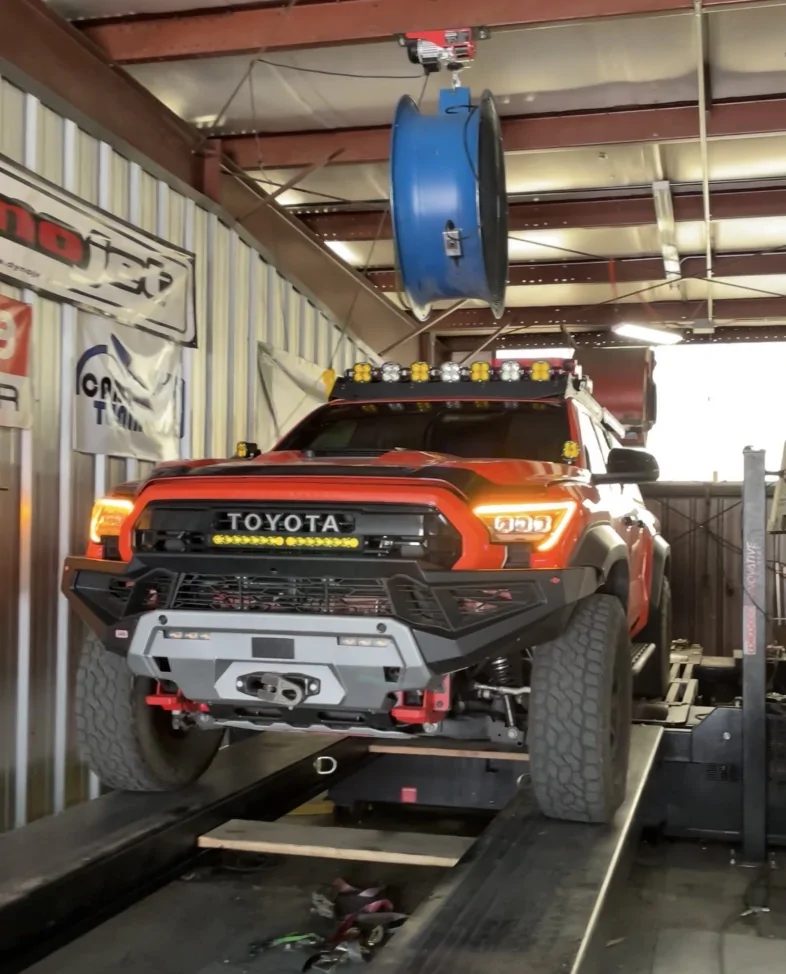
After much online discussion about intake performance on the new 2.4T Tacoma platform, I wanted to perform a controlled comparison between several popular intake systems using the same truck, same dyno, same fuel, and same testing procedure.

The goal was not to prove that one intake “wins,” but rather to document how these systems behave on the factory calibration and how the ECU responds to them under controlled conditions.


This testing was intended to provide comparative real-world data using a consistent and repeatable process. While no chassis dyno comparison can perfectly eliminate every variable, significant effort was made to keep testing conditions as consistent as possible between intake systems, including vehicle configuration, fuel, dyno setup, operating temperature, adaptation process, and test procedure.

The results shown here should be viewed as comparative findings from this specific vehicle and test environment, not as absolute universal performance numbers for every truck or condition.


Test Vehicle
  • 2024 Toyota Tacoma (Non-Hybrid)
  • 8-Speed Automatic Transmission
  • Approximately 12,000 miles
  • 91 octane fuel
  • Dyno testing performed in 4th gear
  • AFE charge pipes installed throughout all testing
80321B95-EC3C-452D-B8B6-8685FFC12151.webp


Wheel & Tire Setup
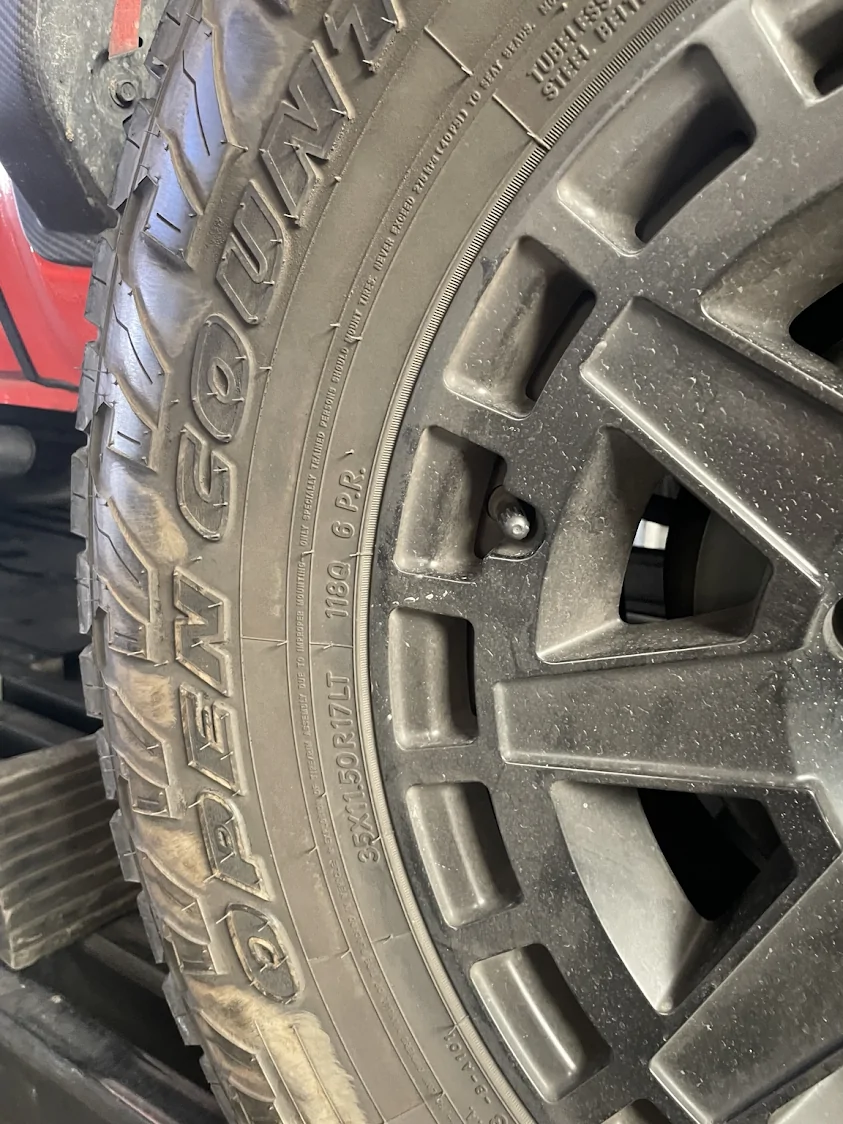
  • ICON alloy wheels
  • Toyo Open Country A/T tires
  • 35x11.50R17LT
  • Load Range C
tire.webp


It is important to note that this truck is running a significantly heavier-than-stock wheel and tire package. This absolutely affects measured wheel horsepower and acceleration rate on a chassis dyno compared to stock-equipped trucks.

The objective of this testing was comparative consistency between intake systems — not chasing the highest absolute dyno number.


Intakes Tested
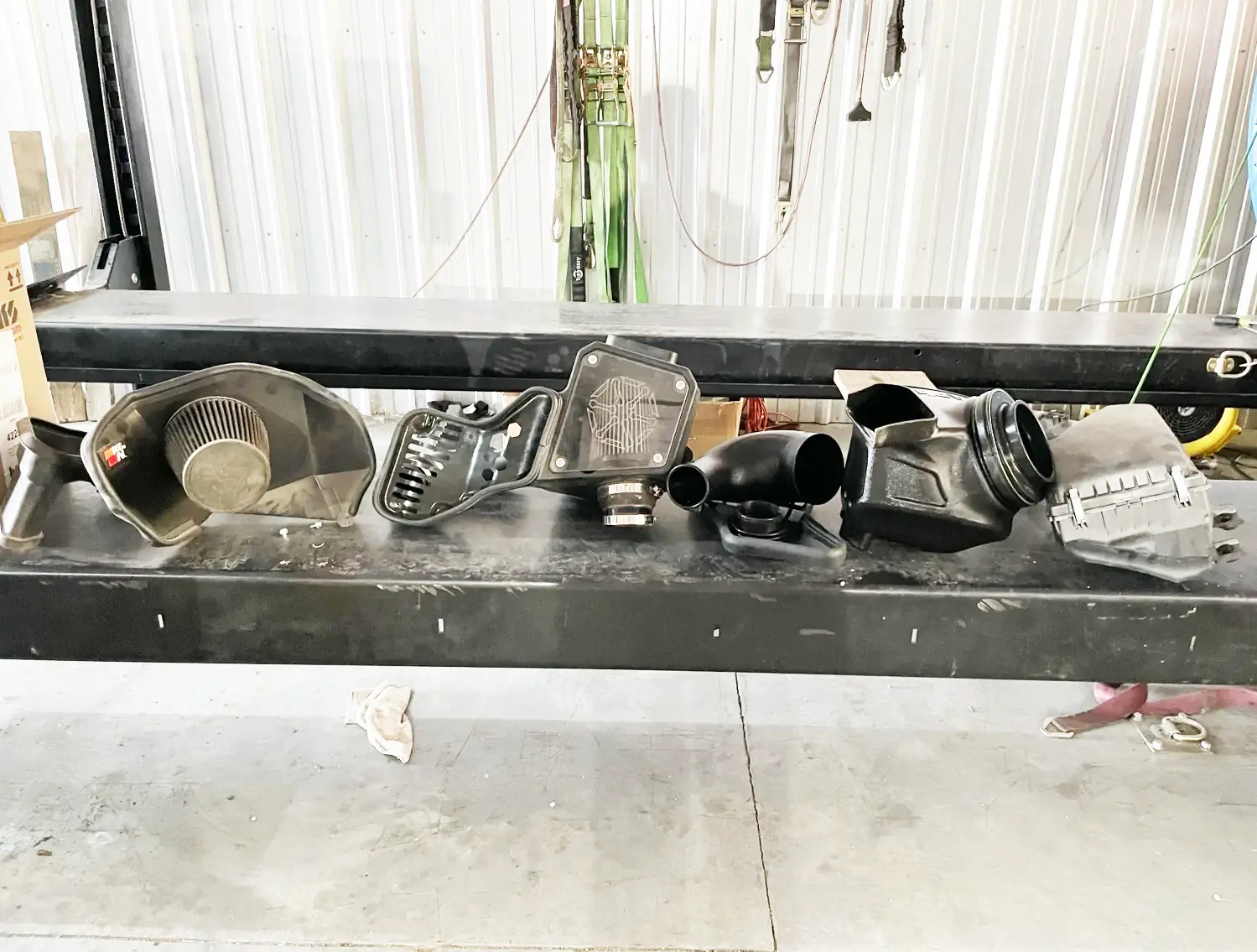
  • Factory airbox
  • Banks intake
  • SXTH intake
  • K&N intake (older version that does not replace the turbo inlet)
All intake comparisons shown below were performed on the factory calibration and stock turbocharger.


47078-5a1100fbff3c1a630cf2549d531eef5d.webp


Test Procedure

Each intake was installed individually and tested using the same vehicle under the same conditions.

The following process was repeated for every intake:

  1. ECU learning reset performed
  2. Vehicle driven to begin repopulating learned airflow and fuel trim behavior
  3. Three dyno pulls performed
  4. Pull 0 was discarded because it was consistently lower immediately after the reset process began
  5. Pull 2 was used as the stabilized comparison run
One thing that surprised me during testing was how quickly this platform adapts after an ECU learning reset. The difference between Pull 1 and Pull 2 was smaller than expected across all intake systems, indicating that long term fuel trims and airflow model corrections populate very rapidly on this platform.


Dyno Results – Stock Calibration

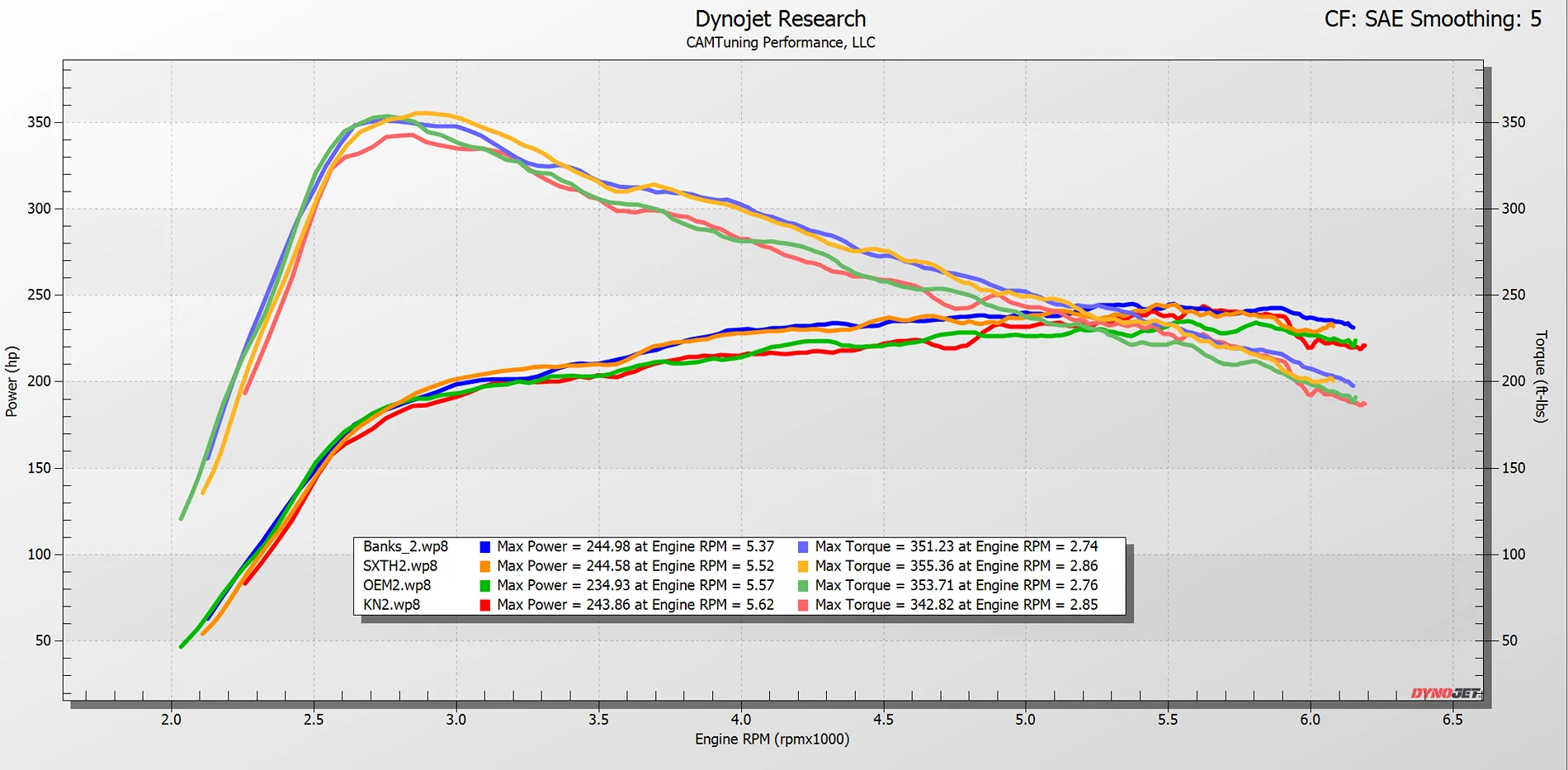
Despite significant differences in intake design, the dyno results were remarkably close.

Peak horsepower results:
  • Banks: 244.98 whp
  • SXTH: 244.58 whp
  • OEM Airbox: 234.93 whp
  • K&N: 243.86 whp
Torque curves were also extremely similar throughout most of the pull.

The biggest takeaway from the dyno portion of this testing is that on the factory calibration and stock turbocharger, the ECU’s torque and airflow management strategy minimizes outright power differences between quality intake systems more than many enthusiasts expect.


intake dyno compliation.webp


Fuel Trim Observations

While horsepower differences remained relatively small, fuel correction behavior varied much more noticeably between intake systems.

Approximate overall fuel trim behavior observed during testing:
  • OEM airbox: approximately ±5%
  • K&N: approximately ±5%
  • SXTH: approximately 10–12%
  • Banks: approximately 13–14%
This was in line with what I've seen on the other trucks I've tuned with tese intakes.
This does NOT necessarily mean one intake is “bad” and another is “good.” What it does show is that different intake geometries and MAF housing designs deviate from the factory airflow model by different amounts when operated on the stock calibration.

The factory ECU adapted quickly to all tested systems, but some required substantially more correction than others to maintain commanded fueling. None of them had any CEL during testing.


Final Thoughts

The most important aspect of this testing was consistency.

Every intake was tested:

  • on the same vehicle
  • on the same dyno
  • on the same fuel
  • on the same day
  • using the same testing procedure
That consistency matters far more than comparing isolated dyno numbers from different vehicles, climates, dynos, or adaptation states.

Under those controlled conditions, all tested intake systems performed relatively similarly on the factory calibration and stock turbocharger.

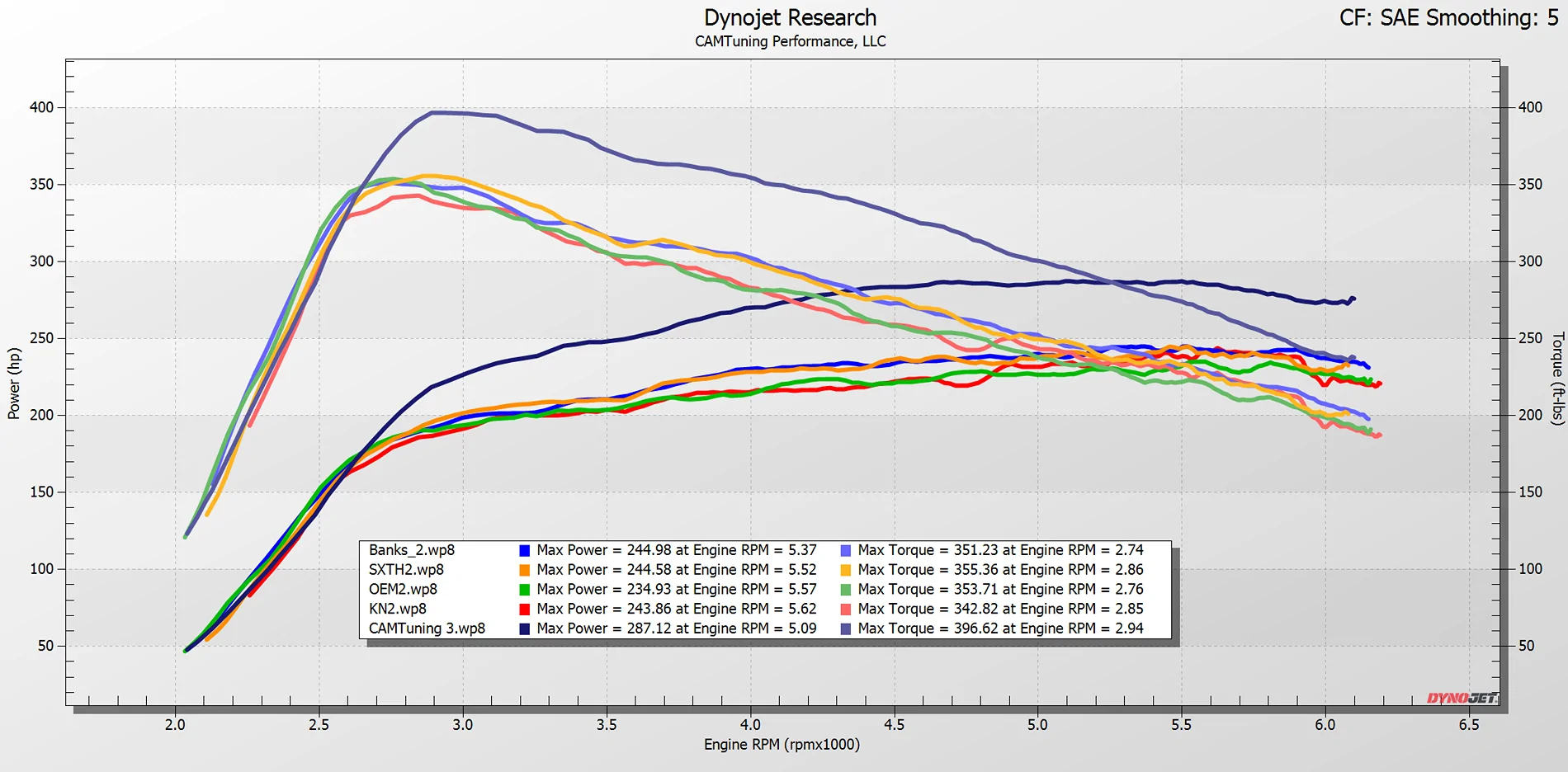
After completing the stock calibration testing, the K&N intake was professionally calibrated on 91 octane for the owner of this truck. Once the truck received a complete calibration — including airflow modeling, torque request strategy, fueling, ignition timing, boost control, and transmission tuning — the intake responded significantly better than it did on the factory calibration while maintaining stable fuel correction behavior.

custom tune kn.webp


That is the biggest conclusion from this testing:

These intake systems are all relatively comparable on the stock tune, but they have substantially more potential once paired with proper professional calibration.

The factory ECU is capable of adapting surprisingly well on its own, but custom tuning allows the airflow model, fuel correction behavior, and overall performance to be optimized correctly rather than simply compensated for.
I would
2024 Tacoma Intake Comparison Testing – Stock Calibration vs Real-World Results

After much online discussion about intake performance on the new 2.4T Tacoma platform, I wanted to perform a controlled comparison between several popular intake systems using the same truck, same dyno, same fuel, and same testing procedure.

The goal was not to prove that one intake “wins,” but rather to document how these systems behave on the factory calibration and how the ECU responds to them under controlled conditions.


This testing was intended to provide comparative real-world data using a consistent and repeatable process. While no chassis dyno comparison can perfectly eliminate every variable, significant effort was made to keep testing conditions as consistent as possible between intake systems, including vehicle configuration, fuel, dyno setup, operating temperature, adaptation process, and test procedure.

The results shown here should be viewed as comparative findings from this specific vehicle and test environment, not as absolute universal performance numbers for every truck or condition.


Test Vehicle
  • 2024 Toyota Tacoma (Non-Hybrid)
  • 8-Speed Automatic Transmission
  • Approximately 12,000 miles
  • 91 octane fuel
  • Dyno testing performed in 4th gear
  • AFE charge pipes installed throughout all testing
80321B95-EC3C-452D-B8B6-8685FFC12151.webp


Wheel & Tire Setup
  • ICON alloy wheels
  • Toyo Open Country A/T tires
  • 35x11.50R17LT
  • Load Range C
tire.webp


It is important to note that this truck is running a significantly heavier-than-stock wheel and tire package. This absolutely affects measured wheel horsepower and acceleration rate on a chassis dyno compared to stock-equipped trucks.

The objective of this testing was comparative consistency between intake systems — not chasing the highest absolute dyno number.


Intakes Tested
  • Factory airbox
  • Banks intake
  • SXTH intake
  • K&N intake (older version that does not replace the turbo inlet)
All intake comparisons shown below were performed on the factory calibration and stock turbocharger.


47078-5a1100fbff3c1a630cf2549d531eef5d.webp


Test Procedure

Each intake was installed individually and tested using the same vehicle under the same conditions.

The following process was repeated for every intake:

  1. ECU learning reset performed
  2. Vehicle driven to begin repopulating learned airflow and fuel trim behavior
  3. Three dyno pulls performed
  4. Pull 0 was discarded because it was consistently lower immediately after the reset process began
  5. Pull 2 was used as the stabilized comparison run
One thing that surprised me during testing was how quickly this platform adapts after an ECU learning reset. The difference between Pull 1 and Pull 2 was smaller than expected across all intake systems, indicating that long term fuel trims and airflow model corrections populate very rapidly on this platform.


Dyno Results – Stock Calibration

Despite significant differences in intake design, the dyno results were remarkably close.

Peak horsepower results:
  • Banks: 244.98 whp
  • SXTH: 244.58 whp
  • OEM Airbox: 234.93 whp
  • K&N: 243.86 whp
Torque curves were also extremely similar throughout most of the pull.

The biggest takeaway from the dyno portion of this testing is that on the factory calibration and stock turbocharger, the ECU’s torque and airflow management strategy minimizes outright power differences between quality intake systems more than many enthusiasts expect.


intake dyno compliation.webp


Fuel Trim Observations

While horsepower differences remained relatively small, fuel correction behavior varied much more noticeably between intake systems.

Approximate overall fuel trim behavior observed during testing:
  • OEM airbox: approximately ±5%
  • K&N: approximately ±5%
  • SXTH: approximately 10–12%
  • Banks: approximately 13–14%
This was in line with what I've seen on the other trucks I've tuned with tese intakes.
This does NOT necessarily mean one intake is “bad” and another is “good.” What it does show is that different intake geometries and MAF housing designs deviate from the factory airflow model by different amounts when operated on the stock calibration.

The factory ECU adapted quickly to all tested systems, but some required substantially more correction than others to maintain commanded fueling. None of them had any CEL during testing.


Final Thoughts

The most important aspect of this testing was consistency.

Every intake was tested:

  • on the same vehicle
  • on the same dyno
  • on the same fuel
  • on the same day
  • using the same testing procedure
That consistency matters far more than comparing isolated dyno numbers from different vehicles, climates, dynos, or adaptation states.

Under those controlled conditions, all tested intake systems performed relatively similarly on the factory calibration and stock turbocharger.

After completing the stock calibration testing, the K&N intake was professionally calibrated on 91 octane for the owner of this truck. Once the truck received a complete calibration — including airflow modeling, torque request strategy, fueling, ignition timing, boost control, and transmission tuning — the intake responded significantly better than it did on the factory calibration while maintaining stable fuel correction behavior.

custom tune kn.webp


That is the biggest conclusion from this testing:

These intake systems are all relatively comparable on the stock tune, but they have substantially more potential once paired with proper professional calibration.

The factory ECU is capable of adapting surprisingly well on its own, but custom tuning allows the airflow model, fuel correction behavior, and overall performance to be optimized correctly rather than simply compensated for.
i would love to see a comparison of those intakes vs stock intake with a TRD air filter vs the stock paper filter
 
OP
OP
CAMTuning

CAMTuning

TRD Off-Road
Well-known member
BASIC Sponsor
First Name
Cameron
Joined
Apr 2, 2025
Threads
21
Messages
280
Reaction score
399
Location
New Mexico
Vehicle(s)
2025 Tacoma TRD OffRoad
I would

i would love to see a comparison of those intakes vs stock intake with a TRD air filter vs the stock paper filter
If the opportunity presents itself, I will do that test. I imagine it will only make a minor difference if any at all.
 

Sponsored

JayTech

TRD Off-Road Premium
Well-known member
First Name
Jay
Joined
May 5, 2025
Threads
2
Messages
210
Reaction score
213
Location
Canada
Vehicle(s)
2025 Toyota Tacoma TRD ORP
Would have liked to see Mishimoto included in these tests but looking at the results, its pretty clear it wouldn't be much different. Very small differences between the intakes. Though I have to wonder, if a change in altitude or air density would start to show where one could start to take a real lead in gains or not.
 

Diablo Taco

TRD Sport Premium
Member
Joined
May 18, 2026
Threads
2
Messages
17
Reaction score
11
Location
Biloxi, MS
Vehicle(s)
2026 TRD Sport 4x4
I ended up going with the SXTH intake. That said, if you get the chance, I'd love to see Mishimoto and Stillen added to the comparison. Of course, that would probably mean retesting the other intakes as well, since ambient temperatures during your original testing were likely much cooler than they are now, which could affect the results. Thanks for everything you do for the 4th Gen community. Your testing and content have been incredibly helpful!
Sponsored


Top